
← Back to Articles
Article
The Bangladesh Factor: Emerging Security Challenges for India and the Future of Border Management
By Maj Gen Dr Rajan Kochhar, VSM (Retd) is an international affairs and defence analyst, former MGAOC, Central Command, and former Director, NIET Business School, Greater Noida
November 16, 2026
Introduction
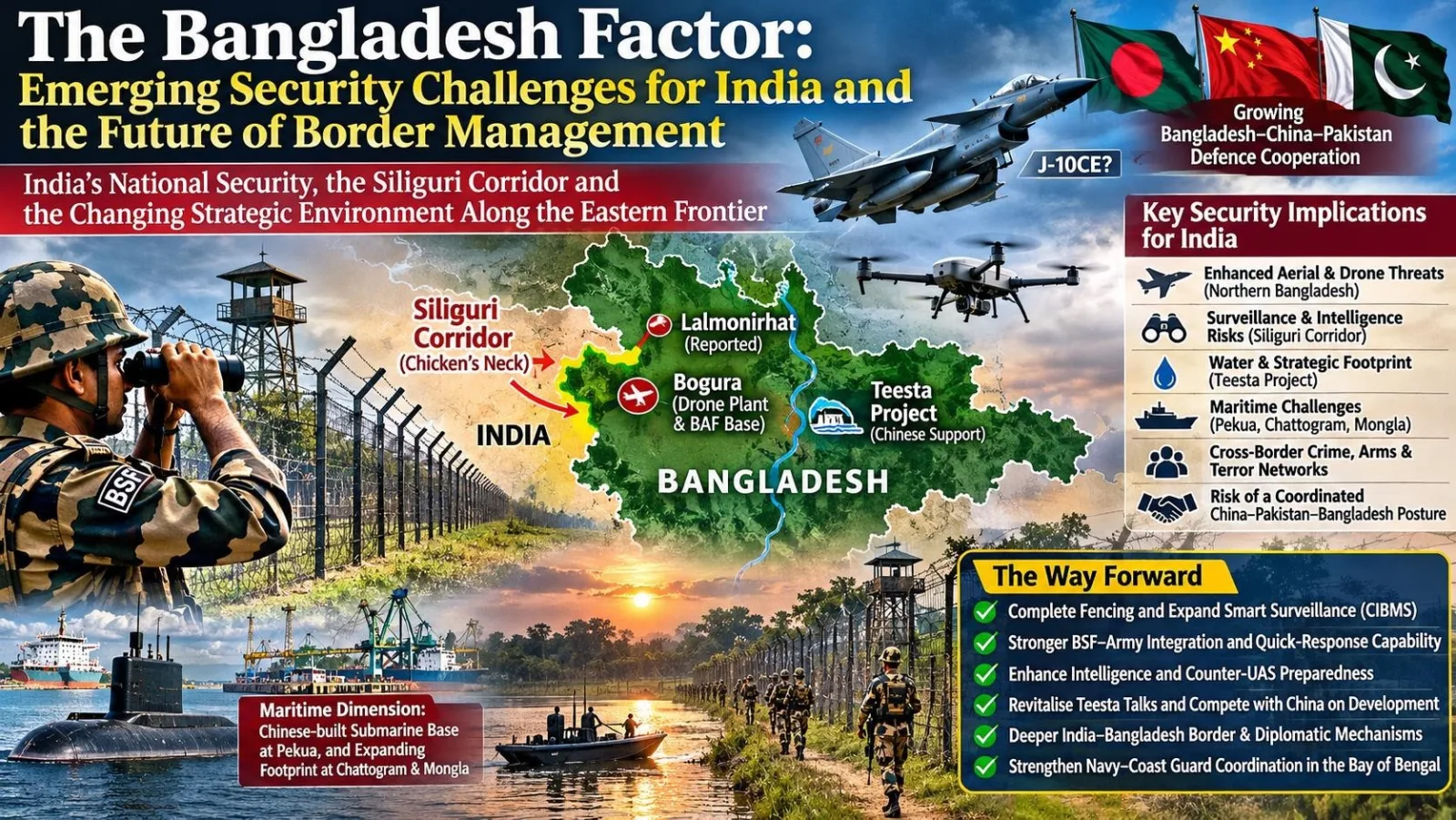
India's eastern frontier is entering a period of strategic uncertainty. Developments in Bangladesh, particularly its growing defence and technological cooperation with China, expanding engagement with Pakistan and Türkiye, proposed military infrastructure in the northern region, and increasing Chinese involvement in strategically sensitive development projects, have introduced new dimensions to India's national security calculations.
The Indo-Bangladesh relationship has historically been characterised by geographical interdependence, economic cooperation, cultural connections and considerable security collaboration. India played a decisive role in the emergence of Bangladesh in 1971. Over the decades, both countries developed mechanisms to address insurgency, cross-border terrorism, illegal migration, human trafficking, smuggling and border disputes. Cooperation between the Border Security Force (BSF) and Border Guard Bangladesh (BGB) became an important instrument of regional stability.
However, the political and strategic environment has changed considerably. The deterioration of bilateral confidence, particularly following the political transition in Bangladesh and the continuing controversy surrounding former Prime Minister Sheikh Hasina, has created space for external powers to expand their influence.
The significance of these developments cannot be assessed individually. Their cumulative impact is more important. A Chinese-supported drone manufacturing ecosystem, a Turkish-linked drone facility near a proposed Bangladesh Air Force base at Bogura, possible acquisition of advanced combat aircraft, Chinese participation in the Teesta River project and expanding maritime cooperation could gradually change the strategic character of Bangladesh's northern and southern regions. The challenge for New Delhi is therefore to strengthen deterrence, surveillance, intelligence coordination and border management without converting Bangladesh into a permanent strategic adversary. India's response must combine military preparedness with diplomatic engagement, economic cooperation and institutional mechanisms.
The Changing Strategic Orientation of Bangladesh
 Introduction
India's eastern frontier is entering a period of strategic uncertainty. Developments in Bangladesh, particularly its growing defence and technological cooperation with China, expanding engagement with Pakistan and Türkiye, proposed military infrastructure in the northern region, and increasing Chinese involvement in strategically sensitive development projects, have introduced new dimensions to India's national security calculations.
The Indo-Bangladesh relationship has historically been characterised by geographical interdependence, economic cooperation, cultural connections and considerable security collaboration. India played a decisive role in the emergence of Bangladesh in 1971. Over the decades, both countries developed mechanisms to address insurgency, cross-border terrorism, illegal migration, human trafficking, smuggling and border disputes. Cooperation between the Border Security Force (BSF) and Border Guard Bangladesh (BGB) became an important instrument of regional stability.
However, the political and strategic environment has changed considerably. The deterioration of bilateral confidence, particularly following the political transition in Bangladesh and the continuing controversy surrounding former Prime Minister Sheikh Hasina, has created space for external powers to expand their influence.
The significance of these developments cannot be assessed individually. Their cumulative impact is more important. A Chinese-supported drone manufacturing ecosystem, a Turkish-linked drone facility near a proposed Bangladesh Air Force base at Bogura, possible acquisition of advanced combat aircraft, Chinese participation in the Teesta River project and expanding maritime cooperation could gradually change the strategic character of Bangladesh's northern and southern regions. The challenge for New Delhi is therefore to strengthen deterrence, surveillance, intelligence coordination and border management without converting Bangladesh into a permanent strategic adversary. India's response must combine military preparedness with diplomatic engagement, economic cooperation and institutional mechanisms.
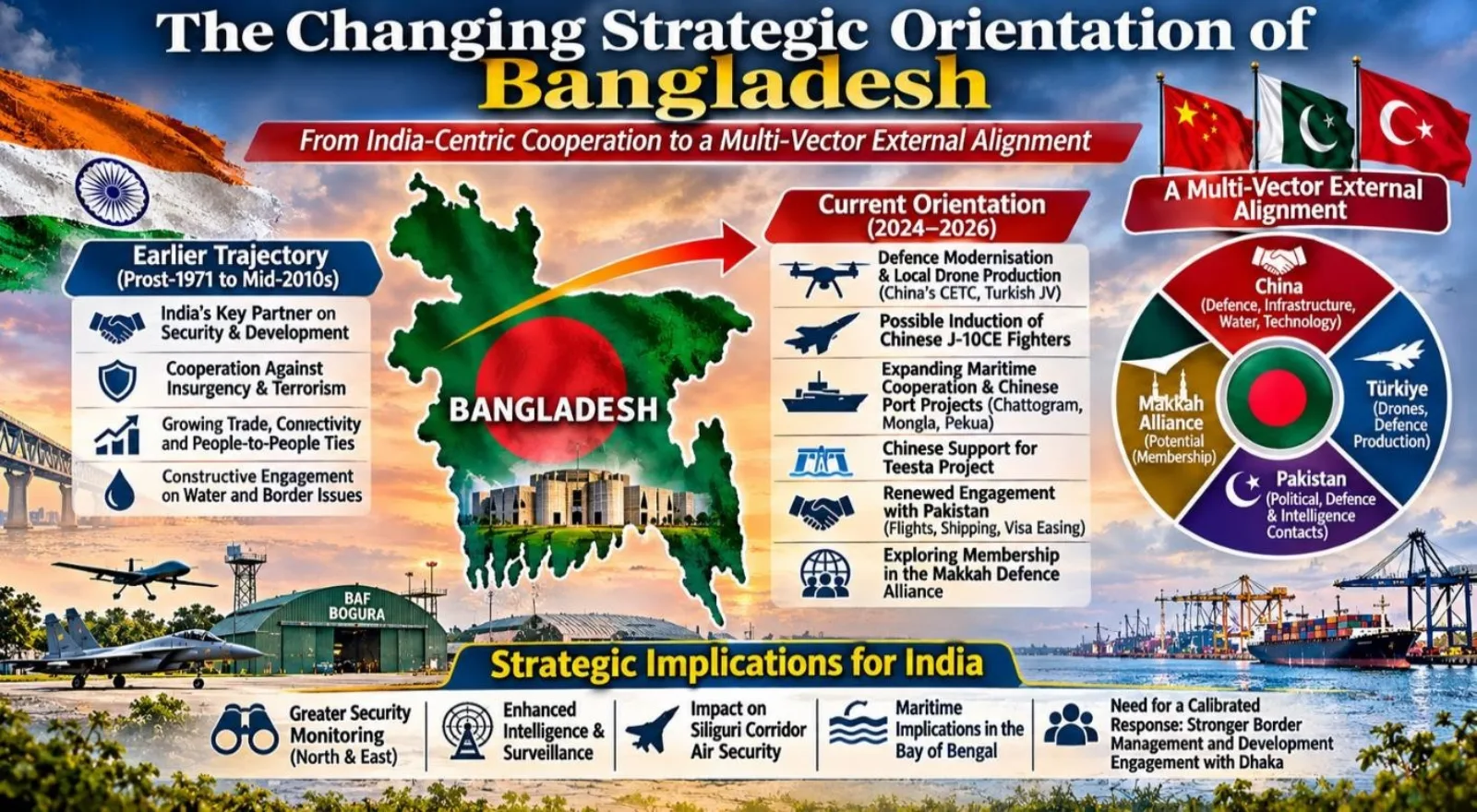
The Changing Strategic Orientation of Bangladesh
Bangladesh's growing defence engagement with China is an important development. The agreement signed between the Bangladesh Air Force and China Electronics Technology Group Corporation International (CETC) in January 2026 provides for a domestic UAV manufacturing and assembly facility, technology transfer and technical cooperation. The initial focus includes medium-altitude long-endurance and vertical take-off and landing UAVs. In July 2026, Bangladesh also announced a Turkish joint-venture drone manufacturing facility at Bogura, adjacent to an airport being upgraded and a proposed Bangladesh Air Force base. The government has indicated that the northern base is intended to accommodate newly inducted fighter aircraft.
Bogura's importance arises from its position in northern Bangladesh. The development of an airbase, aviation infrastructure and drone manufacturing capability in this region could enhance Bangladesh's ability to conduct aerial surveillance and military operations over its northern districts. Depending on the platforms, sensors and operational doctrine eventually introduced, this could have implications for India's North Bengal frontier. Reports concerning Lalmonirhat also require careful assessment. Lalmonirhat's geographical proximity to the Siliguri Corridor makes any military infrastructure development there strategically relevant. However, reports of a new operational airbase must not be confused with verified evidence of its construction or deployment. India should base its threat assessment on satellite imagery, construction activity, procurement records and operational indicators rather than speculation.
The Siliguri Corridor: The Central Strategic Concern
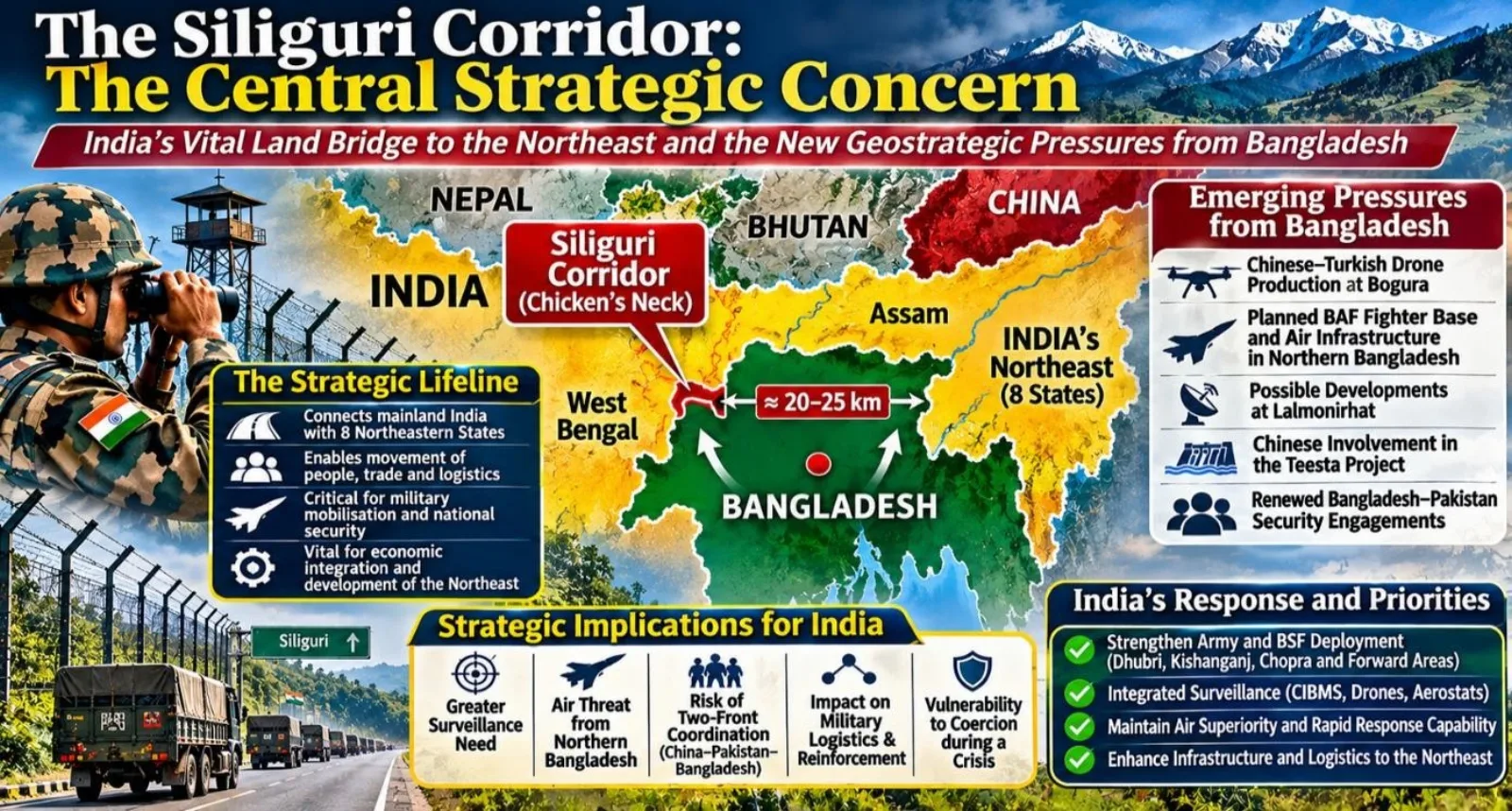 The Siliguri Corridor, popularly described as the Chicken's Neck, is perhaps the most sensitive geographical feature of India's eastern strategic landscape. Connecting mainland India with the eight northeastern states, it is a narrow land bridge whose security has implications extending well beyond the immediate border.
Any military or technological development in northern Bangladesh must consequently be examined in relation to this corridor. The development of Bogura as an air and aerospace centre, the possible modernisation of Lalmonirhat, and the increasing Chinese footprint in the Teesta region collectively warrant a more comprehensive Indian security assessment.
The Indian Army's reported establishment of additional military stations at Dhubri, Kishanganj and Chopra reflects a prudent approach to the changing security environment. These locations provide opportunities to strengthen operational preparedness, improve logistical responsiveness and facilitate closer coordination with the BSF. This should not be interpreted as preparation for an imminent conflict with Bangladesh. Rather, it is a measure of strategic insurance against an uncertain regional environment. The new military locations can contribute to quicker reinforcement, improved intelligence coordination, enhanced surveillance and better operational preparedness in the event of a crisis.
However, the real effectiveness of these deployments will depend on connectivity, command relationships, communications interoperability, logistics and clearly defined Army–BSF coordination arrangements.
The Drone Revolution and Its Implications for Border Security
The establishment of Chinese- and Turkish-supported drone manufacturing facilities in Bangladesh introduces a new dimension to border management. Drones have fundamentally altered the character of modern warfare. Their utility extends from surveillance and reconnaissance to target acquisition, electronic intelligence, communication relay and precision strike capabilities.
The manufacturing facilities at Bogura and the CETC-supported production arrangement could gradually give Bangladesh greater indigenous capacity in unmanned systems. For India, the principal concern is not simply the number of drones Bangladesh may manufacture. It is the possibility of developing a comprehensive ecosystem involving sensors, communications, navigation, software, maintenance and military training. The implications for the Indo-Bangladesh border are considerable. The availability of sophisticated surveillance drones could enhance monitoring of Indian border installations, movement patterns and logistical infrastructure. Depending on their eventual capabilities, such platforms could also be used for electronic surveillance and intelligence collection.
There is an additional concern regarding the proliferation of commercially available drones to criminal networks. Small unmanned aircraft can potentially be used for narcotics trafficking, arms delivery, reconnaissance and the movement of prohibited materials across difficult riverine stretches.
The BSF must therefore move beyond a predominantly ground-based surveillance model. A layered counter-UAS architecture should become an integral component of border management. This should include detection through radar and radio-frequency sensors, electro-optical and infrared surveillance, electronic identification, authorised jamming and suitable interception capabilities.
The BSF should also expand its own drone fleet for persistent border surveillance, particularly in riverine, marshy and densely vegetated areas where physical fencing is either difficult or impossible. Aerostats, tethered observation systems and integrated surveillance platforms can complement conventional UAVs. However, their deployment must be governed by airspace coordination and deconfliction procedures with the Indian Air Force.
The Teesta Project: Water Security and Strategic Geography
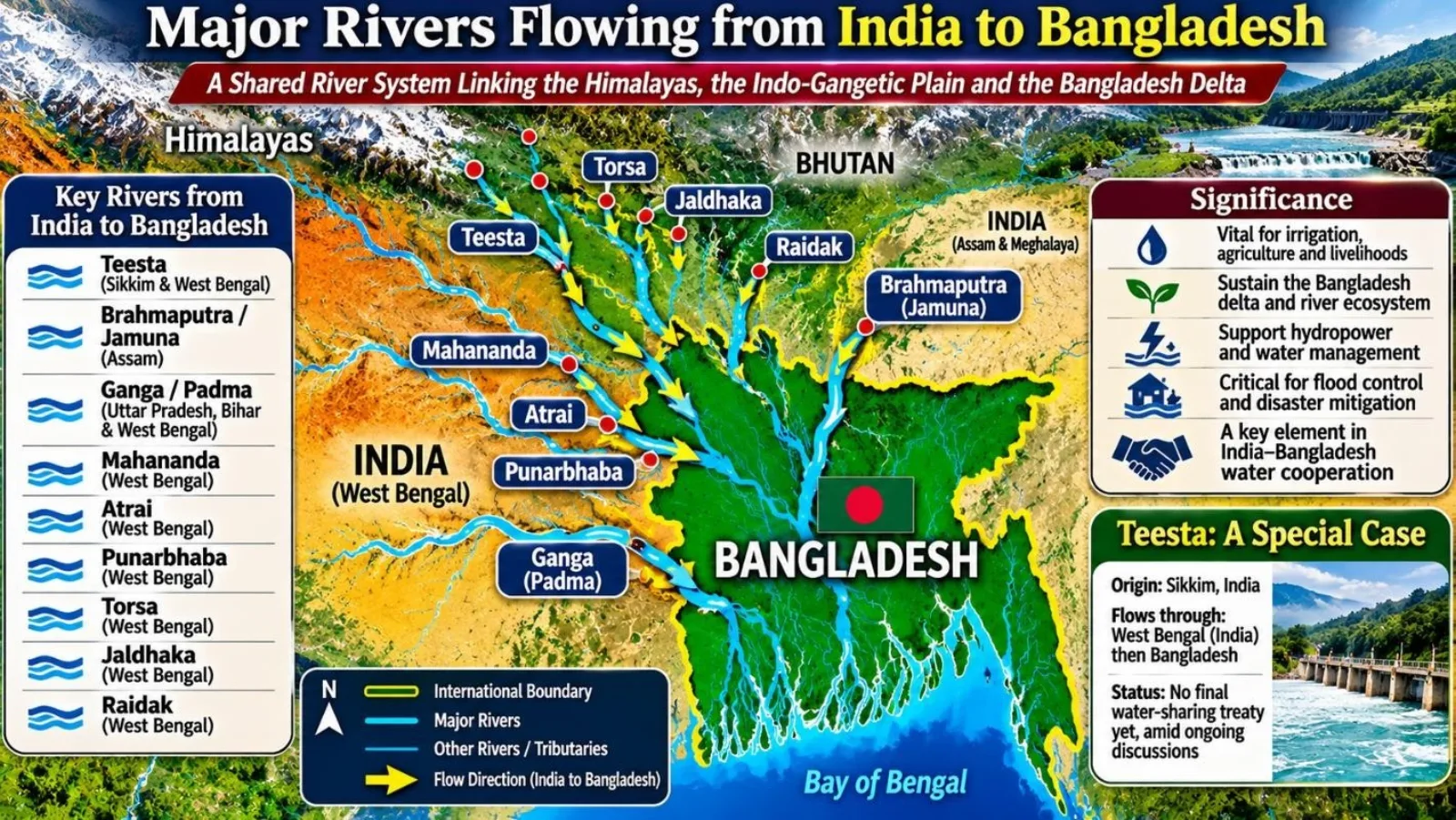
 The Teesta River is not merely a water-sharing issue between India and Bangladesh. It is also an important component of the strategic geography of North Bengal.
The river originates in Sikkim, flows through West Bengal and subsequently enters Bangladesh. Its water resources are critical for agriculture, irrigation, livelihoods and regional development.
The inability of India and Bangladesh to conclude a comprehensive Teesta water-sharing agreement has remained a longstanding irritant in bilateral relations. The draft agreement discussed in 2011 could not be concluded, largely because of concerns regarding water availability and the position of West Bengal. The resulting diplomatic vacuum has provided an opportunity for China to expand its involvement in the Teesta River Comprehensive Management and Restoration Project.
The June 2026 China-Bangladesh Joint Communiqué specifically refers to Chinese support for the project, including technical assistance, feasibility studies, integrated water-resource management, hydrological forecasting, flood prevention and river restoration. This development deserves attention, particularly because the Teesta basin is geographically close to the Siliguri Corridor.
However, it is important not to equate Chinese participation in a civilian river-development project with the establishment of a military presence. Engineers, hydrologists and construction personnel are not inherently a security threat. The concern is the possibility of dual-use infrastructure, access to sensitive geographical information and the development of a sustained Chinese technical footprint in a strategically important region.
A comprehensive river-management project may require detailed topographical surveys, hydrological measurements, river-flow monitoring, mapping of embankments, flood-control structures and communication infrastructure. These activities can generate valuable geographical and environmental information.
India should therefore adopt a calibrated monitoring mechanism. The Joint Rivers Commission must be revitalised, with regular exchanges of hydrological data, advance notification of major construction activities and joint technical assessments wherever possible. India should seek transparency regarding the nature of infrastructure being developed, the contractors involved and the technology being deployed.
The Teesta issue should not be converted into a confrontation over Chinese engineers working in Bangladesh. Such an approach would be counterproductive and could strengthen Dhaka's inclination towards Beijing. India must instead demonstrate that it can offer an equally credible development partnership. This requires addressing West Bengal's water concerns, expediting technical negotiations and proposing joint flood-management, irrigation and river-restoration initiatives. The larger strategic lesson is that development diplomacy is an instrument of national security. If India remains unable to resolve legitimate water-sharing concerns, external powers will find opportunities to occupy the resulting strategic space.
Chinese And Pakistani Military Cooperation: The Emerging Security Equation
China has been Bangladesh's largest defence equipment supplier for several years. Its military relationship with Dhaka now extends across aircraft, naval platforms, armoured vehicles, missiles and other defence systems.
The proposed acquisition of J-10CE fighter aircraft represents a potentially significant development. In August 2026, Bangladesh indicated that a draft procurement proposal for Chinese J-10CE aircraft had been prepared and was undergoing the necessary financial and administrative consideration. Reports have suggested a possible acquisition of up to 24 aircraft, although the precise number, delivery schedule and final contractual arrangements require confirmation.
The J-10CE is a modern multirole combat aircraft. Its potential integration into the Bangladesh Air Force would introduce new capabilities in beyond-visual-range air combat, radar surveillance and precision engagement, depending on the weapons and sensors supplied. The aircraft is also operated by Pakistan. This creates an important commonality in the Chinese defence ecosystem.
However, it would be incorrect to assume that Bangladesh would automatically become operationally integrated with the Pakistan Air Force merely by acquiring the same aircraft. The extent of common training, maintenance, weapons integration, data-sharing and operational cooperation would depend on separate agreements. Nevertheless, India must monitor the possibility of a deeper China-Pakistan-Bangladesh defence relationship.
The principal concern is the potential for Chinese-origin platforms, communications equipment, maintenance systems and software to create long-term technical dependencies. The possibility of sensitive information being accessible to external suppliers must also be examined. It should not be assumed that Chinese or Pakistani intelligence agencies automatically obtain access to Bangladesh's operational data. Such access would depend on the contractual, technical and command arrangements.For India, the appropriate response is to enhance intelligence collection on the evolving military ecosystem rather than react merely to aircraft acquisition announcements.
The National Technical Research Organisation, Defence Intelligence Agency, military intelligence organisations and other relevant agencies should maintain coordinated assessments of procurement, infrastructure development, training patterns and electronic systems.
The IAF must undertake periodic assessments of the changing air threat along the eastern theatre. These should include radar coverage, combat aircraft capabilities, airfield infrastructure, weapons ranges and the implications for operational planning. The acquisition of J-10CE aircraft would not, by itself, deny the IAF freedom of action over the Siliguri Corridor. That would depend on the actual force posture, deployment, readiness, supporting sensors, weapons and operational intentions of the Bangladesh Air Force. India must retain adequate air superiority and air-defence capabilities in the eastern sector while avoiding unnecessary military signalling.
Pakistan's Return and The Possibility of Renewed Intelligence Networks
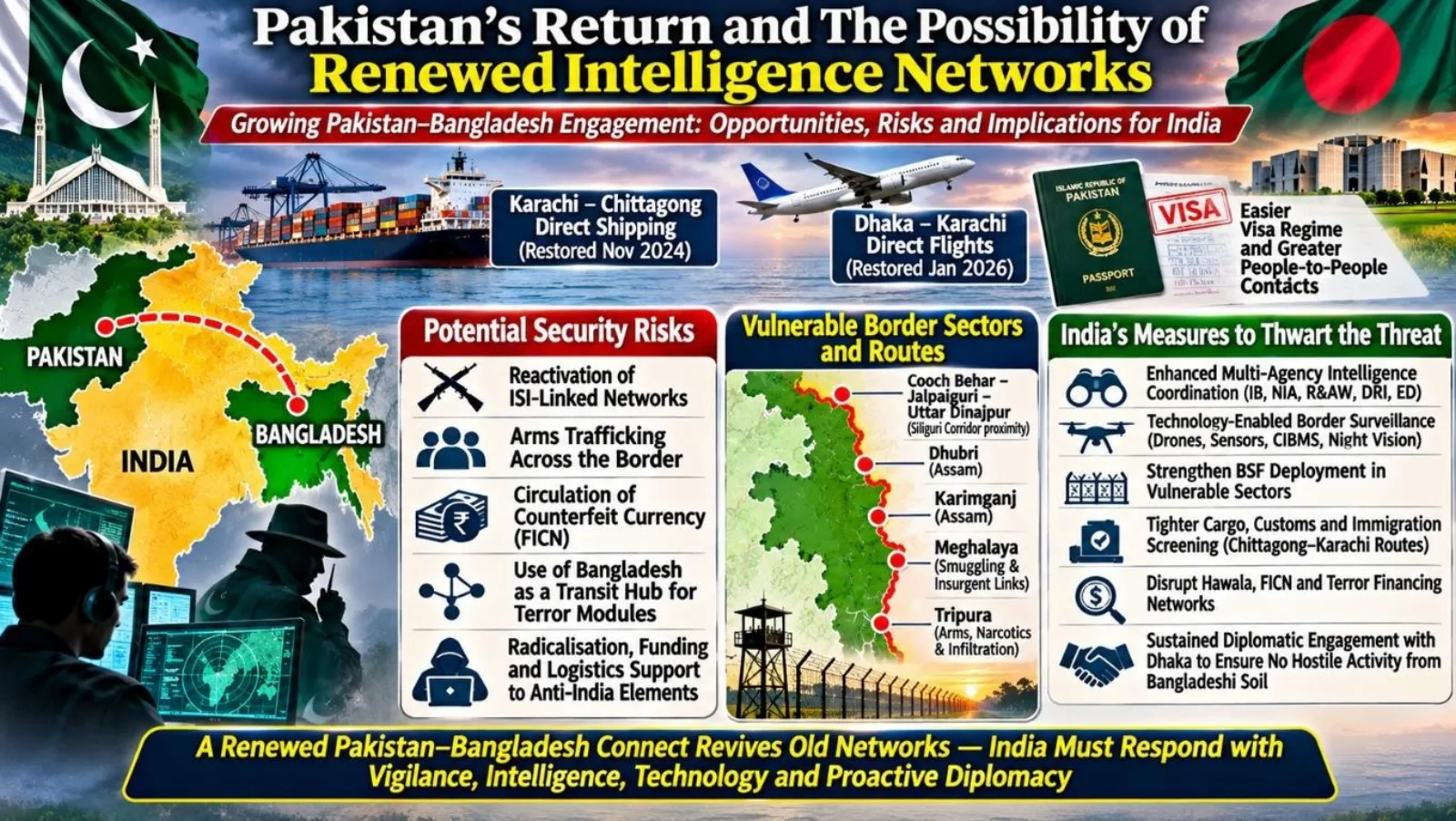 The restoration of Bangladesh-Pakistan connectivity is another development requiring attention.Direct cargo shipping between Karachi and Chittagong resumed in November 2024. Direct Dhaka-Karachi flights were restored in January 2026 after a prolonged interruption. These developments have commercial and diplomatic explanations. Improved trade connectivity and people-to-people contacts are legitimate interests of both countries.
However, the restoration of connectivity also increases the importance of customs intelligence, immigration screening, maritime security and monitoring of suspicious financial transactions. There have also been reports of renewed security and intelligence-level contacts between the two countries. Such contacts should be monitored, but their precise scope and operational consequences should not be assumed without corroborating evidence.
India must be particularly alert to the possibility of transnational criminal and extremist networks exploiting improved connectivity. The vulnerable areas are not restricted to one particular border sector.
The North Bengal frontier, including the Cooch Behar, Jalpaiguri and Uttar Dinajpur regions, deserves attention because of its proximity to the Siliguri Corridor and the complex geographical character of the border. The Assam sector, particularly the Dhubri and Karimganj regions, requires sustained attention to riverine movement and cross-border criminal networks. Meghalaya's forested and hilly stretches and Tripura's extensive border with Bangladesh also present challenges relating to smuggling, trafficking and illegal movement.
These are vulnerability assessments, not assertions that any particular district is currently being used by an organised terrorist network. The historical experience of insurgent groups operating in India's Northeast demonstrates that even limited cross-border logistical support can complicate internal security. The emergence of new terrorist organisations operating from Bangladeshi territory cannot be ruled out, but there is presently no basis for equating Pakistan's renewed diplomatic engagement with the creation of a new anti-India terrorist infrastructure.
India must nevertheless ensure that organisations, facilitators and financial channels hostile to Indian interests do not acquire operational freedom in Bangladesh. The NIA, Intelligence Bureau, Directorate of Revenue Intelligence, Enforcement Directorate, state police forces and border intelligence organisations should strengthen information-sharing. Particular attention should be given to arms trafficking, explosives, counterfeit Indian currency, narcotics, hawala transactions, suspicious charities and recruitment networks.
Customs and immigration authorities should also improve risk-based screening at Chittagong-linked cargo channels and international airports. The objective must be to identify criminal and extremist activity through evidence-based intelligence rather than treating ordinary commercial movement as a security threat.
Border Management: Moving From Physical Fencing To Integrated Surveillance
 India shares approximately 4,096.7 kilometres of international border with Bangladesh, making it one of the longest and most complex borders to manage.
As per the Government of India's February 2025 parliamentary information, approximately 3,232 kilometres had been fenced, leaving about 864 kilometres unfenced, including non-feasible stretches. Subsequent parliamentary information placed the fenced length at approximately 3,240 kilometres by December 2025. The remaining gaps are attributable to several factors, including riverine terrain, marshlands, land acquisition difficulties, population settlements and objections relating to construction.
The physical fencing programme must continue, but fencing alone cannot provide comprehensive border security. India needs to adopt an integrated border-management architecture combining physical infrastructure, electronic surveillance, human intelligence and rapid response capabilities.
The Comprehensive Integrated Border Management System (CIBMS), including its pilot application in Dhubri, provides a useful foundation. The system should be progressively expanded to vulnerable sectors, integrating cameras, thermal imagers, ground sensors, UAVs, radar and command-and-control facilities.
The riverine border deserves special attention. The Brahmaputra and its tributaries, the Ganga-Padma system and other waterways create complex surveillance challenges. Floating Border Outposts, high-speed patrol boats, night-vision equipment, thermal imaging and persistent aerial surveillance must be strengthened. The BSF should also establish a common operational picture integrating information from its own patrols, intelligence agencies, local police, customs and relevant state authorities.
Technology must support, rather than replace, trained personnel. A border-management system is only as effective as its ability to detect suspicious activity, verify information, respond quickly and preserve evidence for investigation.
Army–BSF Integration: A More Effective Operational Relationship
The establishment of additional Army stations near the eastern frontier creates an opportunity to improve the relationship between the Army and the BSF.
The two organisations have distinct responsibilities and operational mandates. The BSF is responsible for guarding the international border, while the Army provides military defence and operational depth. Their coordination must therefore be institutionalised without creating overlapping command structures.
A joint border-security coordination mechanism should operate at the appropriate formation and sector levels. It should facilitate intelligence exchange, operational assessments, communications interoperability, joint contingency planning and logistical coordination. The Army should provide the necessary military perspective on developments in Bangladesh, while the BSF should contribute its detailed understanding of border conditions, local populations, criminal networks and infiltration patterns.
The new military stations at Dhubri, Kishanganj and Chopra should be viewed in this context. They strengthen India's ability to respond to contingencies affecting the Siliguri Corridor and adjoining areas. Their effectiveness will depend on maintaining appropriate reserves, mobility, logistics and communications. The objective should be to create a responsive and integrated security architecture rather than unnecessarily militarise the international boundary.
The Maritime Dimension: Bay Of Bengal and China's Strategic Footprint
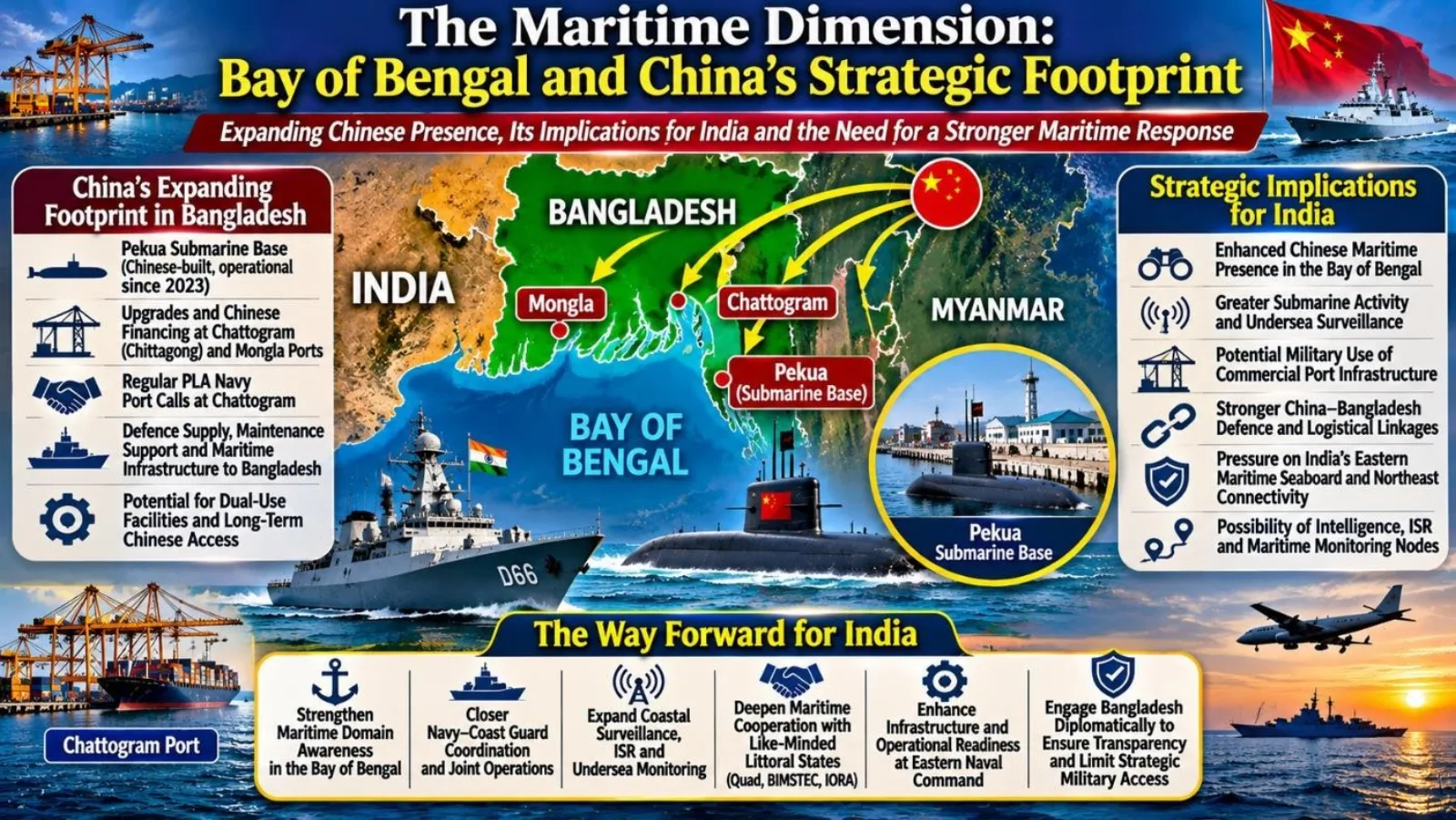 India's security concerns are not confined to the land border. Bangladesh's geographical location gives it considerable importance in the Bay of Bengal, which is increasingly emerging as an area of strategic competition.
The Chinese-built submarine base at Pekua, near Cox's Bazar, commissioned in March 2023, represents an important enhancement of Bangladesh's naval infrastructure. Bangladesh's two Chinese-origin Ming-class submarines are supported by this facility. China's involvement in Chattogram and Mongla port infrastructure adds another dimension.
The June 2026 developments concerning Chinese participation in an economic zone near Mongla, alongside existing port-modernisation arrangements, indicate an expanding Chinese commercial and infrastructure footprint. It is important to distinguish commercial port investment from military access. A Chinese-built port or an economic zone does not automatically become a Chinese naval facility.
Nevertheless, port infrastructure can have strategic significance when combined with sustained defence cooperation, naval visits, technical support and access arrangements. For India, the principal concerns are maritime domain awareness, surveillance of naval movements, submarine activity and the possibility of dual-use logistical arrangements.
The Indian Navy must strengthen its maritime surveillance across the northern Bay of Bengal and adjoining sea lanes. The Andaman and Nicobar Command, Eastern Naval Command and relevant Coast Guard formations must improve coordination in maritime intelligence, coastal surveillance and response planning.
The Coast Guard should focus on law enforcement, maritime policing, suspicious vessel identification, illegal fishing, trafficking and coastal security. The Navy must retain responsibility for the wider maritime military picture, including the monitoring of foreign naval deployments and submarine activity.
A common maritime operational picture, supported by coastal radar chains, Automatic Identification System information, satellite surveillance and maritime patrol aircraft, would substantially improve situational awareness. India should also strengthen intelligence-sharing with friendly littoral countries and regional maritime partners.
The Bay of Bengal should not become an area of unregulated strategic competition. India must maintain its maritime advantage through surveillance, operational readiness, diplomatic engagement and credible naval presence.
Operation Sindoor and the Possibility of A Two-Front Strategic Challenge
Operation Sindoor in May 2025 demonstrated the importance of examining India's security challenges across multiple theatres.
The operation primarily concerned the India-Pakistan confrontation. It also highlighted the wider implications of China's military relationship with Pakistan, particularly in the areas of equipment, technology and defence cooperation. However, there is no publicly established evidence that Bangladesh participated in a coordinated military operation against India during Operation Sindoor or that its armed forces undertook hostile coordinated activity on the eastern frontier. This distinction is important.
India must not confuse strategic possibilities with demonstrated operational coordination. Nevertheless, a future India-China crisis in Sikkim or Arunachal Pradesh could create additional strategic complications if Bangladesh adopted an unfavourable diplomatic or military posture.
Dhaka might maintain neutrality, express concern over regional instability or seek to avoid becoming involved in a confrontation between two larger neighbours. Its actual response would depend on the government in power, domestic political considerations, economic interests and external relationships. An overtly hostile military alignment would represent a more serious contingency, but it should not be treated as inevitable.
For India's Eastern Command, the essential requirement is to ensure that a crisis on the northern frontier does not expose vulnerabilities in the eastern and northeastern sectors. Adequate reserves, logistics, communications, air defence, intelligence and transportation capacity must be maintained. The BSF must simultaneously ensure that the international border remains secure against infiltration, smuggling and opportunistic criminal activity.
The armed forces should conduct periodic contingency assessments covering the possibility of simultaneous pressure on the northern and eastern theatres. Such planning is a normal requirement of national defence preparedness and should not be interpreted as an intention to escalate tensions with Bangladesh.
The Makkah Defence Alliance: A New Strategic Variable
The emergence of the Makkah Joint Defence Agreement involving Saudi Arabia, Pakistan and Türkiye introduce another possible dimension to India's regional security calculations.
Bangladesh has expressed interest in the arrangement, although as of the available September 2026 reporting, it had not received a formal invitation and had not joined the agreement. If Bangladesh eventually becomes a member, the implications will depend on the precise commitments and institutional arrangements of the alliance.
The most important issue for India would be the extent of defence cooperation with Pakistan and Türkiye, particularly in training, intelligence exchange, military technology and strategic coordination. However, membership in a defence grouping does not automatically imply participation in an anti-India military arrangement.
India should therefore adopt a measured response. Its intelligence agencies should monitor the alliance's institutional development, defence commitments and military cooperation involving Bangladesh.
The Ministry of External Affairs should maintain direct communication with Dhaka to understand its intentions and ensure that bilateral security arrangements remain functional. The Indian armed forces should undertake an assessment of any resulting changes in defence cooperation, equipment procurement and military training. India must avoid allowing a possible alliance membership to become a self-fulfilling source of hostility.
Border Incidents and The Risk of Escalation
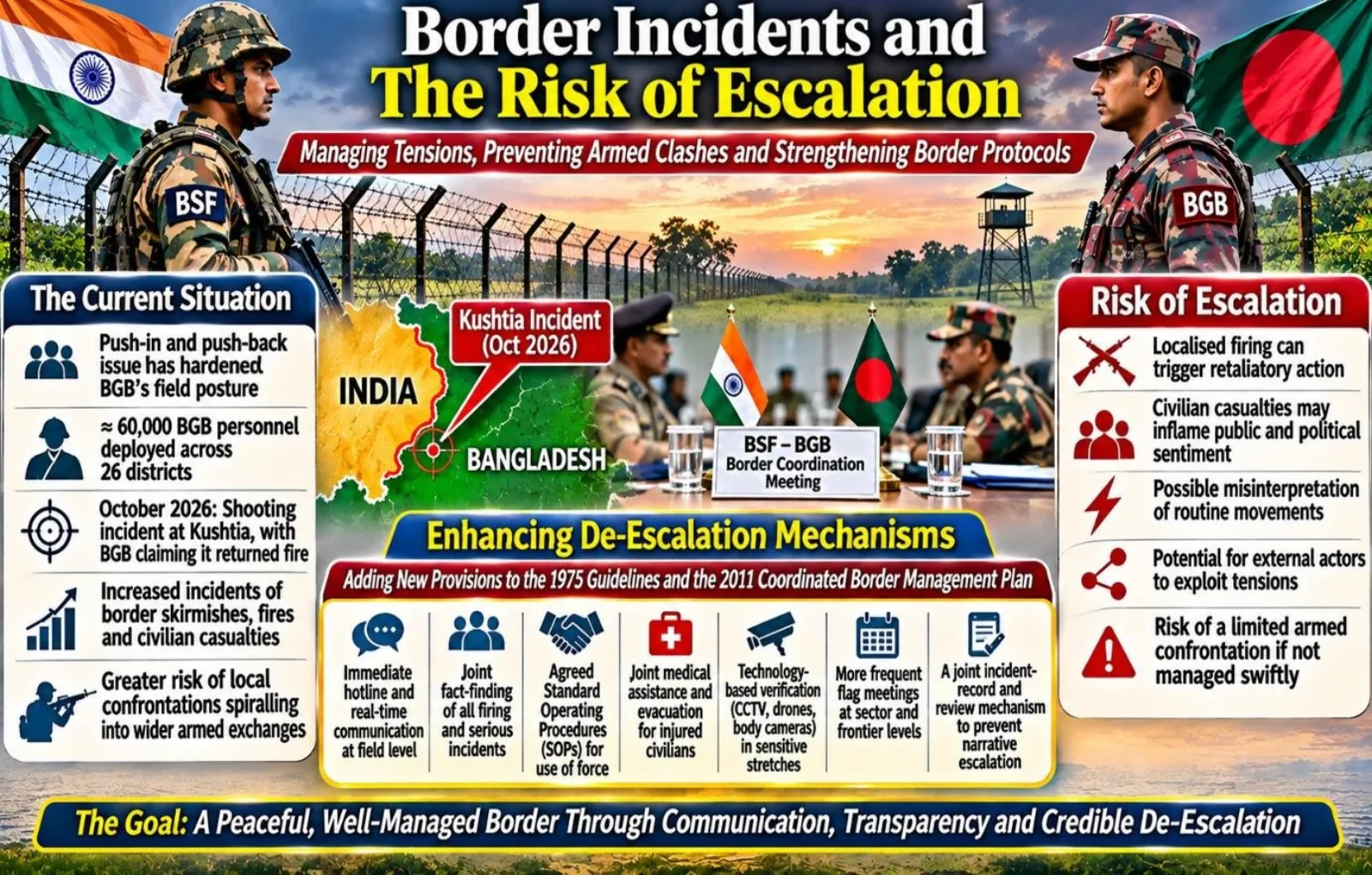 The growing tensions surrounding alleged push-ins, illegal migration and border shootings are a particularly immediate concern.
Reports in June 2026 indicated that Bangladesh had deployed approximately 60,000 BGB personnel across 26 border districts in response to alleged push-in attempts. In October 2026, an incident in the Kushtia sector involving the shooting and injury of a Bangladeshi national was followed by reported BGB return fire. The two sides have presented their own accounts of the circumstances.
The significance of this incident lies in the possibility that a local confrontation can escalate rapidly when political relations are already strained. The BSF and BGB operate in close proximity, often in areas where agricultural activity, population movement and riverine geography complicate border control.
A minor confrontation involving civilians, smugglers or patrol personnel can quickly become a sovereignty issue. The 1975 India-Bangladesh border guidelines and the 2011 Coordinated Border Management Plan provide an institutional foundation for cooperation. However, these arrangements require stronger implementation and additional crisis-management provisions.
A revised protocol should establish immediate communication between local commanders following any shooting or physical confrontation. There should be an agreed procedure for joint fact-finding, preservation of evidence, medical assistance to injured civilians and prompt exchange of information. A mutually understood escalation-control mechanism should clearly distinguish accidental firing, criminal activity, self-defence and deliberate hostile action.
The use of firearms should remain governed by applicable rules of engagement, proportionality and the requirement to avoid civilian casualties. Regular flag meetings should be supplemented by secure communication links between designated BSF and BGB commanders. A joint incident-investigation mechanism would also help prevent competing narratives from escalating into diplomatic confrontations. The most important principle should be that neither force allows a local incident to become a national security crisis.
Diplomacy As An Instrument Of Border Security
The BSF-BGB relationship has historically provided an important buffer against political disagreements. Even during periods of strained bilateral relations, professional engagement between the two border forces has helped maintain a degree of stability. This institutional separation must be preserved.
The extradition issue involving Sheikh Hasina, disagreements over border incidents and the postponement of high-level political engagements should not be allowed to paralyse border-management mechanisms. India should consider institutionalising more frequent meetings between the BSF and BGB at sector, frontier and director-general levels.
A permanent joint coordination mechanism should address infiltration, trafficking, smuggling, riverine security, border infrastructure and civilian grievances. There should also be regular exchanges of criminal intelligence, wanted-person databases and information regarding transnational extremist networks.
Diplomatic engagement must extend beyond the security establishment. India should actively engage Bangladesh's political leadership, armed forces, civil administration, business community and academic institutions. The objective should be to preserve the institutional foundations of the relationship regardless of political changes in either country.
India must also recognise that Bangladesh has legitimate strategic and economic interests of its own. Its engagement with China, Türkiye and other countries cannot automatically be treated as an unfriendly act. The challenge for Indian diplomacy is to ensure that Bangladesh's pursuit of strategic autonomy does not translate into strategic hostility towards India.
Recommendations: India's Border Security Priorities Up To 2030
India's response must be based on a comprehensive national security framework rather than isolated military or administrative measures. First, the completion of feasible border fencing should receive the highest priority. The remaining unfenced stretches must be addressed through a combination of physical barriers, surveillance technology and effective patrolling.
Second, CIBMS should be expanded, particularly across riverine and difficult terrain. UAVs, thermal imaging, ground sensors, radar, electro-optical systems and integrated command centres must become standard components of vulnerable border sectors.
Third, the BSF should be reorganised to provide greater technological capability, mobility and intelligence integration. Dedicated counter-UAS units, riverine surveillance capabilities and specialist intelligence teams should be strengthened.
Fourth, Army–BSF coordination must be institutionalised. The additional Army stations should improve operational depth, rapid reinforcement, intelligence sharing and contingency preparedness without creating confusion in command responsibilities.
Fifth, India must develop an integrated intelligence architecture involving the IB, R&AW, DIA, NTRO, NIA, DRI, state police and other relevant agencies. Information relating to foreign military cooperation, criminal networks, suspicious financial transactions and cross-border extremist activity must be assessed collectively.
Sixth, the IAF should periodically review its eastern air-defence posture in response to developments in Bangladesh's military aviation capabilities. The emphasis should be on maintaining credible deterrence, surveillance and operational preparedness.
Seventh, maritime surveillance in the Bay of Bengal should be strengthened through closer Navy–Coast Guard coordination, maritime domain awareness and monitoring of submarine-related developments.
Eighth, India should revitalise the Joint Rivers Commission and seek an early resolution of the Teesta issue. Development cooperation, water-sharing arrangements and flood-management mechanisms must be treated as strategic priorities.
Ninth, the 1975 Guidelines and the 2011 Coordinated Border Management Plan should be updated through mutually agreed protocols covering incident response, flag meetings, civilian safety, information sharing and crisis de-escalation.
Finally, India must compete with China through development and connectivity rather than military pressure alone. Cross-border trade, infrastructure, power connectivity, railway links, river management and economic cooperation should become instruments of strategic engagement.
Conclusion: From Border Guarding To Strategic Border Management
The security environment along India's eastern frontier is undergoing a significant transformation. Bangladesh's expanding defence cooperation with China, its renewed engagement with Pakistan, the development of drone manufacturing facilities, the proposed modernisation of its Air Force and the increasing Chinese footprint in the Teesta and Bay of Bengal regions collectively require a more comprehensive Indian response.
The principal challenge is not an imminent military confrontation with Bangladesh. It is the possibility of a gradual strategic realignment that could complicate India's security calculations along the Siliguri Corridor, the Northeast and the Bay of Bengal.
India must prepare for this possibility without allowing its policy to become driven by apprehension. The BSF must remain the principal instrument of border guarding, supported by technology, intelligence and stronger coordination with state agencies. The Army must provide operational depth and military preparedness. The IAF and Navy must retain the capabilities necessary to protect India's airspace and maritime interests.
Equally important, the Ministry of External Affairs must ensure that political disagreements do not destroy the institutional mechanisms that have historically maintained stability along the border. By 2030, India should aim to establish a technologically integrated, intelligence-driven and diplomatically supported eastern border-security architecture.
The guiding principle must be clear: India should secure its borders, protect the Siliguri Corridor, preserve its strategic freedom of action and simultaneously maintain a cooperative relationship with Bangladesh.
A secure border and a stable Bangladesh are not competing objectives. They are complementary requirements of India's long-term national security.
Bibliography And References
Government Of India and Official Documents
Ministry of Home Affairs, Government of India, Parliamentary Reply on Fencing of India-Bangladesh Border, 4 February 2025.
Ministry of Home Affairs, Government of India, Parliamentary Reply on Indo-Bangladesh Border Security and Surveillance, March 2025.
Ministry of External Affairs, Government of India, Statements on India-Bangladesh Relations and Teesta River Cooperation, 2026.
Ministry of Home Affairs, Border Management-I Division, Government of India. Joint India-Bangladesh Guidelines, 1975.
Coordinated Border Management Plan between BSF and BGB, 2011.
Strategic And Defence Research
United States Naval Institute, The Growing Presence of Chinese-Built Submarines in the Indian Ocean Region, Proceedings, August 2024.
Observer Research Foundation, Integrated Check Posts on the India-Bangladesh Border: A Field Survey and Brief Analysis.
PRS Legislative Research, Demand for Grants 2026-27: Ministry of Home Affairs.
News And Regional Reporting
Reuters, Bangladesh in Talks to Buy Chinese J-10CE Fighter Jets, 25 August 2026.
Reuters, Bangladesh Could Consider Joining Mecca Pact, 25 August 2026.
The Daily Star, Dhaka and Beijing Sign Drone Production Deal, 28 January 2026.
The Daily Star, Turkiye to Help Set Up Drone Factory in Bogura, 10 July 2026.
bdnews24.com, Bangladesh Signs Deal with Chinese Firm to Produce Drones, January 2026.
China-Bangladesh Joint Communiqué, 26 June 2026.
The Daily Star and Prothom Alo, Reports on the October 2026 Kushtia Border Incident.
Note: Procurement proposals, reports of military infrastructure and allegations of intelligence cooperation have been distinguished from confirmed operational capabilities. The analysis reflects publicly available information up to 10 November 2026.
About The Author
Maj Gen Dr Rajan Kochhar, VSM (Retd) is an international affairs and defence analyst, former MGAOC, Central Command, and former Director, NIET Business School, Greater Noida. An alumnus of the National Defence Academy, Defence Services Staff College and College of Defence Management, he has extensive experience in military operations, logistics, defence modernisation and strategic affairs. He has served in Jammu and Kashmir and the Northeast and has been associated with defence education, strategic communication and policy advisory assignments. He is the author of Breaking the Chinese Myth and writes extensively on India's national security, geopolitics, military modernisation and emerging strategic challenges.
Editorial observation: The article's central argument is that India should prepare for a possible China–Pakistan–Bangladesh strategic convergence without prematurely treating Bangladesh as an adversary. This distinction is essential for a balanced national-security assessment.
Introduction
India's eastern frontier is entering a period of strategic uncertainty. Developments in Bangladesh, particularly its growing defence and technological cooperation with China, expanding engagement with Pakistan and Türkiye, proposed military infrastructure in the northern region, and increasing Chinese involvement in strategically sensitive development projects, have introduced new dimensions to India's national security calculations.
The Indo-Bangladesh relationship has historically been characterised by geographical interdependence, economic cooperation, cultural connections and considerable security collaboration. India played a decisive role in the emergence of Bangladesh in 1971. Over the decades, both countries developed mechanisms to address insurgency, cross-border terrorism, illegal migration, human trafficking, smuggling and border disputes. Cooperation between the Border Security Force (BSF) and Border Guard Bangladesh (BGB) became an important instrument of regional stability.
However, the political and strategic environment has changed considerably. The deterioration of bilateral confidence, particularly following the political transition in Bangladesh and the continuing controversy surrounding former Prime Minister Sheikh Hasina, has created space for external powers to expand their influence.
The significance of these developments cannot be assessed individually. Their cumulative impact is more important. A Chinese-supported drone manufacturing ecosystem, a Turkish-linked drone facility near a proposed Bangladesh Air Force base at Bogura, possible acquisition of advanced combat aircraft, Chinese participation in the Teesta River project and expanding maritime cooperation could gradually change the strategic character of Bangladesh's northern and southern regions. The challenge for New Delhi is therefore to strengthen deterrence, surveillance, intelligence coordination and border management without converting Bangladesh into a permanent strategic adversary. India's response must combine military preparedness with diplomatic engagement, economic cooperation and institutional mechanisms.
The Changing Strategic Orientation of Bangladesh
Bangladesh's growing defence engagement with China is an important development. The agreement signed between the Bangladesh Air Force and China Electronics Technology Group Corporation International (CETC) in January 2026 provides for a domestic UAV manufacturing and assembly facility, technology transfer and technical cooperation. The initial focus includes medium-altitude long-endurance and vertical take-off and landing UAVs. In July 2026, Bangladesh also announced a Turkish joint-venture drone manufacturing facility at Bogura, adjacent to an airport being upgraded and a proposed Bangladesh Air Force base. The government has indicated that the northern base is intended to accommodate newly inducted fighter aircraft.
Bogura's importance arises from its position in northern Bangladesh. The development of an airbase, aviation infrastructure and drone manufacturing capability in this region could enhance Bangladesh's ability to conduct aerial surveillance and military operations over its northern districts. Depending on the platforms, sensors and operational doctrine eventually introduced, this could have implications for India's North Bengal frontier. Reports concerning Lalmonirhat also require careful assessment. Lalmonirhat's geographical proximity to the Siliguri Corridor makes any military infrastructure development there strategically relevant. However, reports of a new operational airbase must not be confused with verified evidence of its construction or deployment. India should base its threat assessment on satellite imagery, construction activity, procurement records and operational indicators rather than speculation.
The Siliguri Corridor: The Central Strategic Concern
The Siliguri Corridor, popularly described as the Chicken's Neck, is perhaps the most sensitive geographical feature of India's eastern strategic landscape. Connecting mainland India with the eight northeastern states, it is a narrow land bridge whose security has implications extending well beyond the immediate border.
Any military or technological development in northern Bangladesh must consequently be examined in relation to this corridor. The development of Bogura as an air and aerospace centre, the possible modernisation of Lalmonirhat, and the increasing Chinese footprint in the Teesta region collectively warrant a more comprehensive Indian security assessment.
The Indian Army's reported establishment of additional military stations at Dhubri, Kishanganj and Chopra reflects a prudent approach to the changing security environment. These locations provide opportunities to strengthen operational preparedness, improve logistical responsiveness and facilitate closer coordination with the BSF. This should not be interpreted as preparation for an imminent conflict with Bangladesh. Rather, it is a measure of strategic insurance against an uncertain regional environment. The new military locations can contribute to quicker reinforcement, improved intelligence coordination, enhanced surveillance and better operational preparedness in the event of a crisis.
However, the real effectiveness of these deployments will depend on connectivity, command relationships, communications interoperability, logistics and clearly defined Army–BSF coordination arrangements.
The Drone Revolution and Its Implications for Border Security
The establishment of Chinese- and Turkish-supported drone manufacturing facilities in Bangladesh introduces a new dimension to border management. Drones have fundamentally altered the character of modern warfare. Their utility extends from surveillance and reconnaissance to target acquisition, electronic intelligence, communication relay and precision strike capabilities.
The manufacturing facilities at Bogura and the CETC-supported production arrangement could gradually give Bangladesh greater indigenous capacity in unmanned systems. For India, the principal concern is not simply the number of drones Bangladesh may manufacture. It is the possibility of developing a comprehensive ecosystem involving sensors, communications, navigation, software, maintenance and military training. The implications for the Indo-Bangladesh border are considerable. The availability of sophisticated surveillance drones could enhance monitoring of Indian border installations, movement patterns and logistical infrastructure. Depending on their eventual capabilities, such platforms could also be used for electronic surveillance and intelligence collection.
There is an additional concern regarding the proliferation of commercially available drones to criminal networks. Small unmanned aircraft can potentially be used for narcotics trafficking, arms delivery, reconnaissance and the movement of prohibited materials across difficult riverine stretches.
The BSF must therefore move beyond a predominantly ground-based surveillance model. A layered counter-UAS architecture should become an integral component of border management. This should include detection through radar and radio-frequency sensors, electro-optical and infrared surveillance, electronic identification, authorised jamming and suitable interception capabilities.
The BSF should also expand its own drone fleet for persistent border surveillance, particularly in riverine, marshy and densely vegetated areas where physical fencing is either difficult or impossible. Aerostats, tethered observation systems and integrated surveillance platforms can complement conventional UAVs. However, their deployment must be governed by airspace coordination and deconfliction procedures with the Indian Air Force.
The Teesta Project: Water Security and Strategic Geography
The Teesta River is not merely a water-sharing issue between India and Bangladesh. It is also an important component of the strategic geography of North Bengal.
The river originates in Sikkim, flows through West Bengal and subsequently enters Bangladesh. Its water resources are critical for agriculture, irrigation, livelihoods and regional development.
The inability of India and Bangladesh to conclude a comprehensive Teesta water-sharing agreement has remained a longstanding irritant in bilateral relations. The draft agreement discussed in 2011 could not be concluded, largely because of concerns regarding water availability and the position of West Bengal. The resulting diplomatic vacuum has provided an opportunity for China to expand its involvement in the Teesta River Comprehensive Management and Restoration Project.
The June 2026 China-Bangladesh Joint Communiqué specifically refers to Chinese support for the project, including technical assistance, feasibility studies, integrated water-resource management, hydrological forecasting, flood prevention and river restoration. This development deserves attention, particularly because the Teesta basin is geographically close to the Siliguri Corridor.
However, it is important not to equate Chinese participation in a civilian river-development project with the establishment of a military presence. Engineers, hydrologists and construction personnel are not inherently a security threat. The concern is the possibility of dual-use infrastructure, access to sensitive geographical information and the development of a sustained Chinese technical footprint in a strategically important region.
A comprehensive river-management project may require detailed topographical surveys, hydrological measurements, river-flow monitoring, mapping of embankments, flood-control structures and communication infrastructure. These activities can generate valuable geographical and environmental information.
India should therefore adopt a calibrated monitoring mechanism. The Joint Rivers Commission must be revitalised, with regular exchanges of hydrological data, advance notification of major construction activities and joint technical assessments wherever possible. India should seek transparency regarding the nature of infrastructure being developed, the contractors involved and the technology being deployed.
The Teesta issue should not be converted into a confrontation over Chinese engineers working in Bangladesh. Such an approach would be counterproductive and could strengthen Dhaka's inclination towards Beijing. India must instead demonstrate that it can offer an equally credible development partnership. This requires addressing West Bengal's water concerns, expediting technical negotiations and proposing joint flood-management, irrigation and river-restoration initiatives. The larger strategic lesson is that development diplomacy is an instrument of national security. If India remains unable to resolve legitimate water-sharing concerns, external powers will find opportunities to occupy the resulting strategic space.
Chinese And Pakistani Military Cooperation: The Emerging Security Equation
China has been Bangladesh's largest defence equipment supplier for several years. Its military relationship with Dhaka now extends across aircraft, naval platforms, armoured vehicles, missiles and other defence systems.
The proposed acquisition of J-10CE fighter aircraft represents a potentially significant development. In August 2026, Bangladesh indicated that a draft procurement proposal for Chinese J-10CE aircraft had been prepared and was undergoing the necessary financial and administrative consideration. Reports have suggested a possible acquisition of up to 24 aircraft, although the precise number, delivery schedule and final contractual arrangements require confirmation.
The J-10CE is a modern multirole combat aircraft. Its potential integration into the Bangladesh Air Force would introduce new capabilities in beyond-visual-range air combat, radar surveillance and precision engagement, depending on the weapons and sensors supplied. The aircraft is also operated by Pakistan. This creates an important commonality in the Chinese defence ecosystem.
However, it would be incorrect to assume that Bangladesh would automatically become operationally integrated with the Pakistan Air Force merely by acquiring the same aircraft. The extent of common training, maintenance, weapons integration, data-sharing and operational cooperation would depend on separate agreements. Nevertheless, India must monitor the possibility of a deeper China-Pakistan-Bangladesh defence relationship.
The principal concern is the potential for Chinese-origin platforms, communications equipment, maintenance systems and software to create long-term technical dependencies. The possibility of sensitive information being accessible to external suppliers must also be examined. It should not be assumed that Chinese or Pakistani intelligence agencies automatically obtain access to Bangladesh's operational data. Such access would depend on the contractual, technical and command arrangements.For India, the appropriate response is to enhance intelligence collection on the evolving military ecosystem rather than react merely to aircraft acquisition announcements.
The National Technical Research Organisation, Defence Intelligence Agency, military intelligence organisations and other relevant agencies should maintain coordinated assessments of procurement, infrastructure development, training patterns and electronic systems.
The IAF must undertake periodic assessments of the changing air threat along the eastern theatre. These should include radar coverage, combat aircraft capabilities, airfield infrastructure, weapons ranges and the implications for operational planning. The acquisition of J-10CE aircraft would not, by itself, deny the IAF freedom of action over the Siliguri Corridor. That would depend on the actual force posture, deployment, readiness, supporting sensors, weapons and operational intentions of the Bangladesh Air Force. India must retain adequate air superiority and air-defence capabilities in the eastern sector while avoiding unnecessary military signalling.
Pakistan's Return and The Possibility of Renewed Intelligence Networks
The restoration of Bangladesh-Pakistan connectivity is another development requiring attention.Direct cargo shipping between Karachi and Chittagong resumed in November 2024. Direct Dhaka-Karachi flights were restored in January 2026 after a prolonged interruption. These developments have commercial and diplomatic explanations. Improved trade connectivity and people-to-people contacts are legitimate interests of both countries.
However, the restoration of connectivity also increases the importance of customs intelligence, immigration screening, maritime security and monitoring of suspicious financial transactions. There have also been reports of renewed security and intelligence-level contacts between the two countries. Such contacts should be monitored, but their precise scope and operational consequences should not be assumed without corroborating evidence.
India must be particularly alert to the possibility of transnational criminal and extremist networks exploiting improved connectivity. The vulnerable areas are not restricted to one particular border sector.
The North Bengal frontier, including the Cooch Behar, Jalpaiguri and Uttar Dinajpur regions, deserves attention because of its proximity to the Siliguri Corridor and the complex geographical character of the border. The Assam sector, particularly the Dhubri and Karimganj regions, requires sustained attention to riverine movement and cross-border criminal networks. Meghalaya's forested and hilly stretches and Tripura's extensive border with Bangladesh also present challenges relating to smuggling, trafficking and illegal movement.
These are vulnerability assessments, not assertions that any particular district is currently being used by an organised terrorist network. The historical experience of insurgent groups operating in India's Northeast demonstrates that even limited cross-border logistical support can complicate internal security. The emergence of new terrorist organisations operating from Bangladeshi territory cannot be ruled out, but there is presently no basis for equating Pakistan's renewed diplomatic engagement with the creation of a new anti-India terrorist infrastructure.
India must nevertheless ensure that organisations, facilitators and financial channels hostile to Indian interests do not acquire operational freedom in Bangladesh. The NIA, Intelligence Bureau, Directorate of Revenue Intelligence, Enforcement Directorate, state police forces and border intelligence organisations should strengthen information-sharing. Particular attention should be given to arms trafficking, explosives, counterfeit Indian currency, narcotics, hawala transactions, suspicious charities and recruitment networks.
Customs and immigration authorities should also improve risk-based screening at Chittagong-linked cargo channels and international airports. The objective must be to identify criminal and extremist activity through evidence-based intelligence rather than treating ordinary commercial movement as a security threat.
Border Management: Moving From Physical Fencing To Integrated Surveillance
India shares approximately 4,096.7 kilometres of international border with Bangladesh, making it one of the longest and most complex borders to manage.
As per the Government of India's February 2025 parliamentary information, approximately 3,232 kilometres had been fenced, leaving about 864 kilometres unfenced, including non-feasible stretches. Subsequent parliamentary information placed the fenced length at approximately 3,240 kilometres by December 2025. The remaining gaps are attributable to several factors, including riverine terrain, marshlands, land acquisition difficulties, population settlements and objections relating to construction.
The physical fencing programme must continue, but fencing alone cannot provide comprehensive border security. India needs to adopt an integrated border-management architecture combining physical infrastructure, electronic surveillance, human intelligence and rapid response capabilities.
The Comprehensive Integrated Border Management System (CIBMS), including its pilot application in Dhubri, provides a useful foundation. The system should be progressively expanded to vulnerable sectors, integrating cameras, thermal imagers, ground sensors, UAVs, radar and command-and-control facilities.
The riverine border deserves special attention. The Brahmaputra and its tributaries, the Ganga-Padma system and other waterways create complex surveillance challenges. Floating Border Outposts, high-speed patrol boats, night-vision equipment, thermal imaging and persistent aerial surveillance must be strengthened. The BSF should also establish a common operational picture integrating information from its own patrols, intelligence agencies, local police, customs and relevant state authorities.
Technology must support, rather than replace, trained personnel. A border-management system is only as effective as its ability to detect suspicious activity, verify information, respond quickly and preserve evidence for investigation.
Army–BSF Integration: A More Effective Operational Relationship
The establishment of additional Army stations near the eastern frontier creates an opportunity to improve the relationship between the Army and the BSF.
The two organisations have distinct responsibilities and operational mandates. The BSF is responsible for guarding the international border, while the Army provides military defence and operational depth. Their coordination must therefore be institutionalised without creating overlapping command structures.
A joint border-security coordination mechanism should operate at the appropriate formation and sector levels. It should facilitate intelligence exchange, operational assessments, communications interoperability, joint contingency planning and logistical coordination. The Army should provide the necessary military perspective on developments in Bangladesh, while the BSF should contribute its detailed understanding of border conditions, local populations, criminal networks and infiltration patterns.
The new military stations at Dhubri, Kishanganj and Chopra should be viewed in this context. They strengthen India's ability to respond to contingencies affecting the Siliguri Corridor and adjoining areas. Their effectiveness will depend on maintaining appropriate reserves, mobility, logistics and communications. The objective should be to create a responsive and integrated security architecture rather than unnecessarily militarise the international boundary.
The Maritime Dimension: Bay Of Bengal and China's Strategic Footprint
India's security concerns are not confined to the land border. Bangladesh's geographical location gives it considerable importance in the Bay of Bengal, which is increasingly emerging as an area of strategic competition.
The Chinese-built submarine base at Pekua, near Cox's Bazar, commissioned in March 2023, represents an important enhancement of Bangladesh's naval infrastructure. Bangladesh's two Chinese-origin Ming-class submarines are supported by this facility. China's involvement in Chattogram and Mongla port infrastructure adds another dimension.
The June 2026 developments concerning Chinese participation in an economic zone near Mongla, alongside existing port-modernisation arrangements, indicate an expanding Chinese commercial and infrastructure footprint. It is important to distinguish commercial port investment from military access. A Chinese-built port or an economic zone does not automatically become a Chinese naval facility.
Nevertheless, port infrastructure can have strategic significance when combined with sustained defence cooperation, naval visits, technical support and access arrangements. For India, the principal concerns are maritime domain awareness, surveillance of naval movements, submarine activity and the possibility of dual-use logistical arrangements.
The Indian Navy must strengthen its maritime surveillance across the northern Bay of Bengal and adjoining sea lanes. The Andaman and Nicobar Command, Eastern Naval Command and relevant Coast Guard formations must improve coordination in maritime intelligence, coastal surveillance and response planning.
The Coast Guard should focus on law enforcement, maritime policing, suspicious vessel identification, illegal fishing, trafficking and coastal security. The Navy must retain responsibility for the wider maritime military picture, including the monitoring of foreign naval deployments and submarine activity.
A common maritime operational picture, supported by coastal radar chains, Automatic Identification System information, satellite surveillance and maritime patrol aircraft, would substantially improve situational awareness. India should also strengthen intelligence-sharing with friendly littoral countries and regional maritime partners.
The Bay of Bengal should not become an area of unregulated strategic competition. India must maintain its maritime advantage through surveillance, operational readiness, diplomatic engagement and credible naval presence.
Operation Sindoor and the Possibility of A Two-Front Strategic Challenge
Operation Sindoor in May 2025 demonstrated the importance of examining India's security challenges across multiple theatres.
The operation primarily concerned the India-Pakistan confrontation. It also highlighted the wider implications of China's military relationship with Pakistan, particularly in the areas of equipment, technology and defence cooperation. However, there is no publicly established evidence that Bangladesh participated in a coordinated military operation against India during Operation Sindoor or that its armed forces undertook hostile coordinated activity on the eastern frontier. This distinction is important.
India must not confuse strategic possibilities with demonstrated operational coordination. Nevertheless, a future India-China crisis in Sikkim or Arunachal Pradesh could create additional strategic complications if Bangladesh adopted an unfavourable diplomatic or military posture.
Dhaka might maintain neutrality, express concern over regional instability or seek to avoid becoming involved in a confrontation between two larger neighbours. Its actual response would depend on the government in power, domestic political considerations, economic interests and external relationships. An overtly hostile military alignment would represent a more serious contingency, but it should not be treated as inevitable.
For India's Eastern Command, the essential requirement is to ensure that a crisis on the northern frontier does not expose vulnerabilities in the eastern and northeastern sectors. Adequate reserves, logistics, communications, air defence, intelligence and transportation capacity must be maintained. The BSF must simultaneously ensure that the international border remains secure against infiltration, smuggling and opportunistic criminal activity.
The armed forces should conduct periodic contingency assessments covering the possibility of simultaneous pressure on the northern and eastern theatres. Such planning is a normal requirement of national defence preparedness and should not be interpreted as an intention to escalate tensions with Bangladesh.
The Makkah Defence Alliance: A New Strategic Variable
The emergence of the Makkah Joint Defence Agreement involving Saudi Arabia, Pakistan and Türkiye introduce another possible dimension to India's regional security calculations.
Bangladesh has expressed interest in the arrangement, although as of the available September 2026 reporting, it had not received a formal invitation and had not joined the agreement. If Bangladesh eventually becomes a member, the implications will depend on the precise commitments and institutional arrangements of the alliance.
The most important issue for India would be the extent of defence cooperation with Pakistan and Türkiye, particularly in training, intelligence exchange, military technology and strategic coordination. However, membership in a defence grouping does not automatically imply participation in an anti-India military arrangement.
India should therefore adopt a measured response. Its intelligence agencies should monitor the alliance's institutional development, defence commitments and military cooperation involving Bangladesh.
The Ministry of External Affairs should maintain direct communication with Dhaka to understand its intentions and ensure that bilateral security arrangements remain functional. The Indian armed forces should undertake an assessment of any resulting changes in defence cooperation, equipment procurement and military training. India must avoid allowing a possible alliance membership to become a self-fulfilling source of hostility.
Border Incidents and The Risk of Escalation
The growing tensions surrounding alleged push-ins, illegal migration and border shootings are a particularly immediate concern.
Reports in June 2026 indicated that Bangladesh had deployed approximately 60,000 BGB personnel across 26 border districts in response to alleged push-in attempts. In October 2026, an incident in the Kushtia sector involving the shooting and injury of a Bangladeshi national was followed by reported BGB return fire. The two sides have presented their own accounts of the circumstances.
The significance of this incident lies in the possibility that a local confrontation can escalate rapidly when political relations are already strained. The BSF and BGB operate in close proximity, often in areas where agricultural activity, population movement and riverine geography complicate border control.
A minor confrontation involving civilians, smugglers or patrol personnel can quickly become a sovereignty issue. The 1975 India-Bangladesh border guidelines and the 2011 Coordinated Border Management Plan provide an institutional foundation for cooperation. However, these arrangements require stronger implementation and additional crisis-management provisions.
A revised protocol should establish immediate communication between local commanders following any shooting or physical confrontation. There should be an agreed procedure for joint fact-finding, preservation of evidence, medical assistance to injured civilians and prompt exchange of information. A mutually understood escalation-control mechanism should clearly distinguish accidental firing, criminal activity, self-defence and deliberate hostile action.
The use of firearms should remain governed by applicable rules of engagement, proportionality and the requirement to avoid civilian casualties. Regular flag meetings should be supplemented by secure communication links between designated BSF and BGB commanders. A joint incident-investigation mechanism would also help prevent competing narratives from escalating into diplomatic confrontations. The most important principle should be that neither force allows a local incident to become a national security crisis.
Diplomacy As An Instrument Of Border Security
The BSF-BGB relationship has historically provided an important buffer against political disagreements. Even during periods of strained bilateral relations, professional engagement between the two border forces has helped maintain a degree of stability. This institutional separation must be preserved.
The extradition issue involving Sheikh Hasina, disagreements over border incidents and the postponement of high-level political engagements should not be allowed to paralyse border-management mechanisms. India should consider institutionalising more frequent meetings between the BSF and BGB at sector, frontier and director-general levels.
A permanent joint coordination mechanism should address infiltration, trafficking, smuggling, riverine security, border infrastructure and civilian grievances. There should also be regular exchanges of criminal intelligence, wanted-person databases and information regarding transnational extremist networks.
Diplomatic engagement must extend beyond the security establishment. India should actively engage Bangladesh's political leadership, armed forces, civil administration, business community and academic institutions. The objective should be to preserve the institutional foundations of the relationship regardless of political changes in either country.
India must also recognise that Bangladesh has legitimate strategic and economic interests of its own. Its engagement with China, Türkiye and other countries cannot automatically be treated as an unfriendly act. The challenge for Indian diplomacy is to ensure that Bangladesh's pursuit of strategic autonomy does not translate into strategic hostility towards India.
Recommendations: India's Border Security Priorities Up To 2030
India's response must be based on a comprehensive national security framework rather than isolated military or administrative measures. First, the completion of feasible border fencing should receive the highest priority. The remaining unfenced stretches must be addressed through a combination of physical barriers, surveillance technology and effective patrolling.
Second, CIBMS should be expanded, particularly across riverine and difficult terrain. UAVs, thermal imaging, ground sensors, radar, electro-optical systems and integrated command centres must become standard components of vulnerable border sectors.
Third, the BSF should be reorganised to provide greater technological capability, mobility and intelligence integration. Dedicated counter-UAS units, riverine surveillance capabilities and specialist intelligence teams should be strengthened.
Fourth, Army–BSF coordination must be institutionalised. The additional Army stations should improve operational depth, rapid reinforcement, intelligence sharing and contingency preparedness without creating confusion in command responsibilities.
Fifth, India must develop an integrated intelligence architecture involving the IB, R&AW, DIA, NTRO, NIA, DRI, state police and other relevant agencies. Information relating to foreign military cooperation, criminal networks, suspicious financial transactions and cross-border extremist activity must be assessed collectively.
Sixth, the IAF should periodically review its eastern air-defence posture in response to developments in Bangladesh's military aviation capabilities. The emphasis should be on maintaining credible deterrence, surveillance and operational preparedness.
Seventh, maritime surveillance in the Bay of Bengal should be strengthened through closer Navy–Coast Guard coordination, maritime domain awareness and monitoring of submarine-related developments.
Eighth, India should revitalise the Joint Rivers Commission and seek an early resolution of the Teesta issue. Development cooperation, water-sharing arrangements and flood-management mechanisms must be treated as strategic priorities.
Ninth, the 1975 Guidelines and the 2011 Coordinated Border Management Plan should be updated through mutually agreed protocols covering incident response, flag meetings, civilian safety, information sharing and crisis de-escalation.
Finally, India must compete with China through development and connectivity rather than military pressure alone. Cross-border trade, infrastructure, power connectivity, railway links, river management and economic cooperation should become instruments of strategic engagement.
Conclusion: From Border Guarding To Strategic Border Management
The security environment along India's eastern frontier is undergoing a significant transformation. Bangladesh's expanding defence cooperation with China, its renewed engagement with Pakistan, the development of drone manufacturing facilities, the proposed modernisation of its Air Force and the increasing Chinese footprint in the Teesta and Bay of Bengal regions collectively require a more comprehensive Indian response.
The principal challenge is not an imminent military confrontation with Bangladesh. It is the possibility of a gradual strategic realignment that could complicate India's security calculations along the Siliguri Corridor, the Northeast and the Bay of Bengal.
India must prepare for this possibility without allowing its policy to become driven by apprehension. The BSF must remain the principal instrument of border guarding, supported by technology, intelligence and stronger coordination with state agencies. The Army must provide operational depth and military preparedness. The IAF and Navy must retain the capabilities necessary to protect India's airspace and maritime interests.
Equally important, the Ministry of External Affairs must ensure that political disagreements do not destroy the institutional mechanisms that have historically maintained stability along the border. By 2030, India should aim to establish a technologically integrated, intelligence-driven and diplomatically supported eastern border-security architecture.
The guiding principle must be clear: India should secure its borders, protect the Siliguri Corridor, preserve its strategic freedom of action and simultaneously maintain a cooperative relationship with Bangladesh.
A secure border and a stable Bangladesh are not competing objectives. They are complementary requirements of India's long-term national security.
Bibliography And References
Government Of India and Official Documents
Ministry of Home Affairs, Government of India, Parliamentary Reply on Fencing of India-Bangladesh Border, 4 February 2025.
Ministry of Home Affairs, Government of India, Parliamentary Reply on Indo-Bangladesh Border Security and Surveillance, March 2025.
Ministry of External Affairs, Government of India, Statements on India-Bangladesh Relations and Teesta River Cooperation, 2026.
Ministry of Home Affairs, Border Management-I Division, Government of India. Joint India-Bangladesh Guidelines, 1975.
Coordinated Border Management Plan between BSF and BGB, 2011.
Strategic And Defence Research
United States Naval Institute, The Growing Presence of Chinese-Built Submarines in the Indian Ocean Region, Proceedings, August 2024.
Observer Research Foundation, Integrated Check Posts on the India-Bangladesh Border: A Field Survey and Brief Analysis.
PRS Legislative Research, Demand for Grants 2026-27: Ministry of Home Affairs.
News And Regional Reporting
Reuters, Bangladesh in Talks to Buy Chinese J-10CE Fighter Jets, 25 August 2026.
Reuters, Bangladesh Could Consider Joining Mecca Pact, 25 August 2026.
The Daily Star, Dhaka and Beijing Sign Drone Production Deal, 28 January 2026.
The Daily Star, Turkiye to Help Set Up Drone Factory in Bogura, 10 July 2026.
bdnews24.com, Bangladesh Signs Deal with Chinese Firm to Produce Drones, January 2026.
China-Bangladesh Joint Communiqué, 26 June 2026.
The Daily Star and Prothom Alo, Reports on the October 2026 Kushtia Border Incident.
Note: Procurement proposals, reports of military infrastructure and allegations of intelligence cooperation have been distinguished from confirmed operational capabilities. The analysis reflects publicly available information up to 10 November 2026.
About The Author
Maj Gen Dr Rajan Kochhar, VSM (Retd) is an international affairs and defence analyst, former MGAOC, Central Command, and former Director, NIET Business School, Greater Noida. An alumnus of the National Defence Academy, Defence Services Staff College and College of Defence Management, he has extensive experience in military operations, logistics, defence modernisation and strategic affairs. He has served in Jammu and Kashmir and the Northeast and has been associated with defence education, strategic communication and policy advisory assignments. He is the author of Breaking the Chinese Myth and writes extensively on India's national security, geopolitics, military modernisation and emerging strategic challenges.
Editorial observation: The article's central argument is that India should prepare for a possible China–Pakistan–Bangladesh strategic convergence without prematurely treating Bangladesh as an adversary. This distinction is essential for a balanced national-security assessment.