← Back to Articles
Article
SITUATION REPORT Pakistan-occupied Kashmir
By Dr. Portia B. Conrad,- Govt & Public Policy, International Relations
August 19, 2026
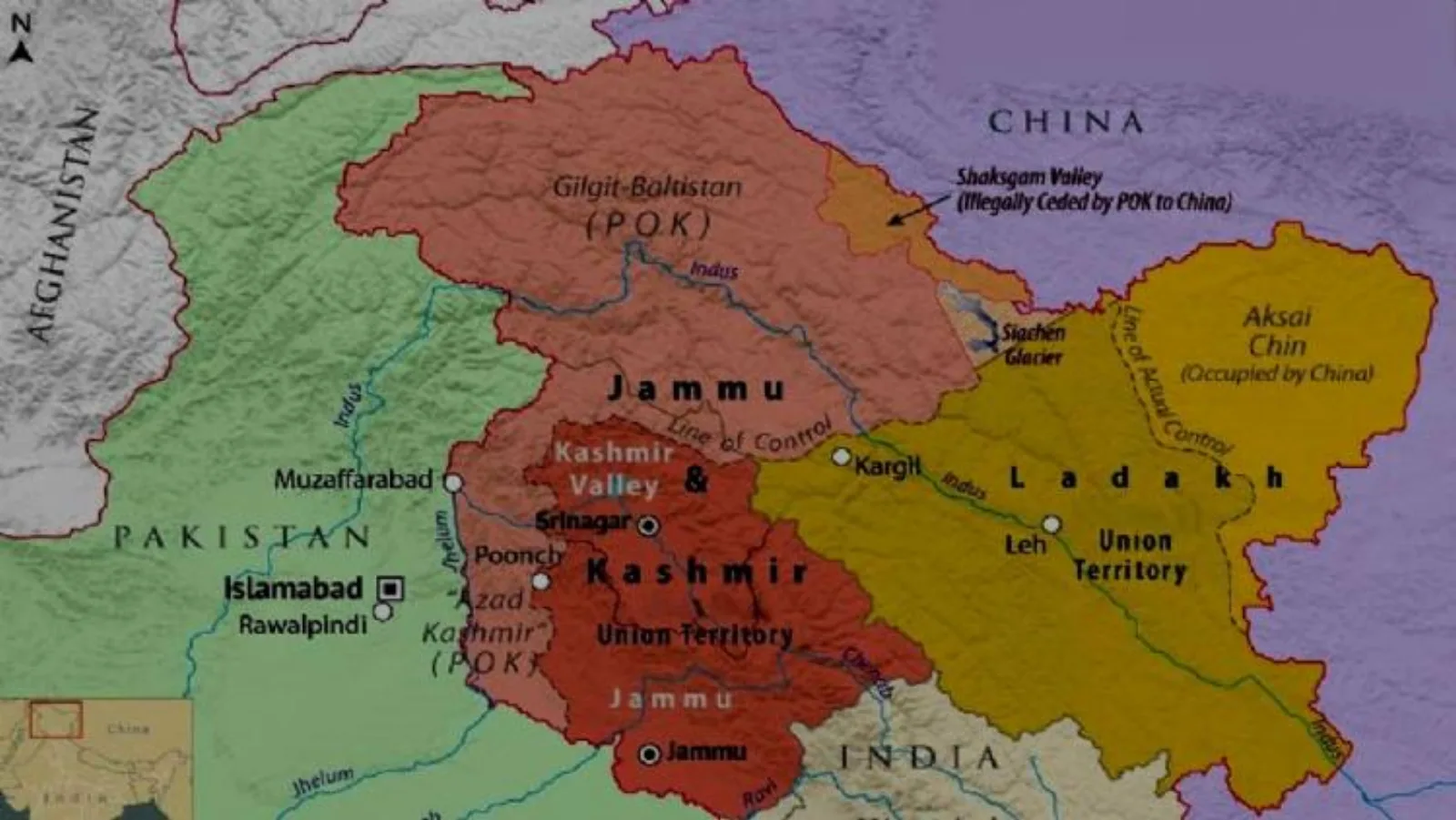
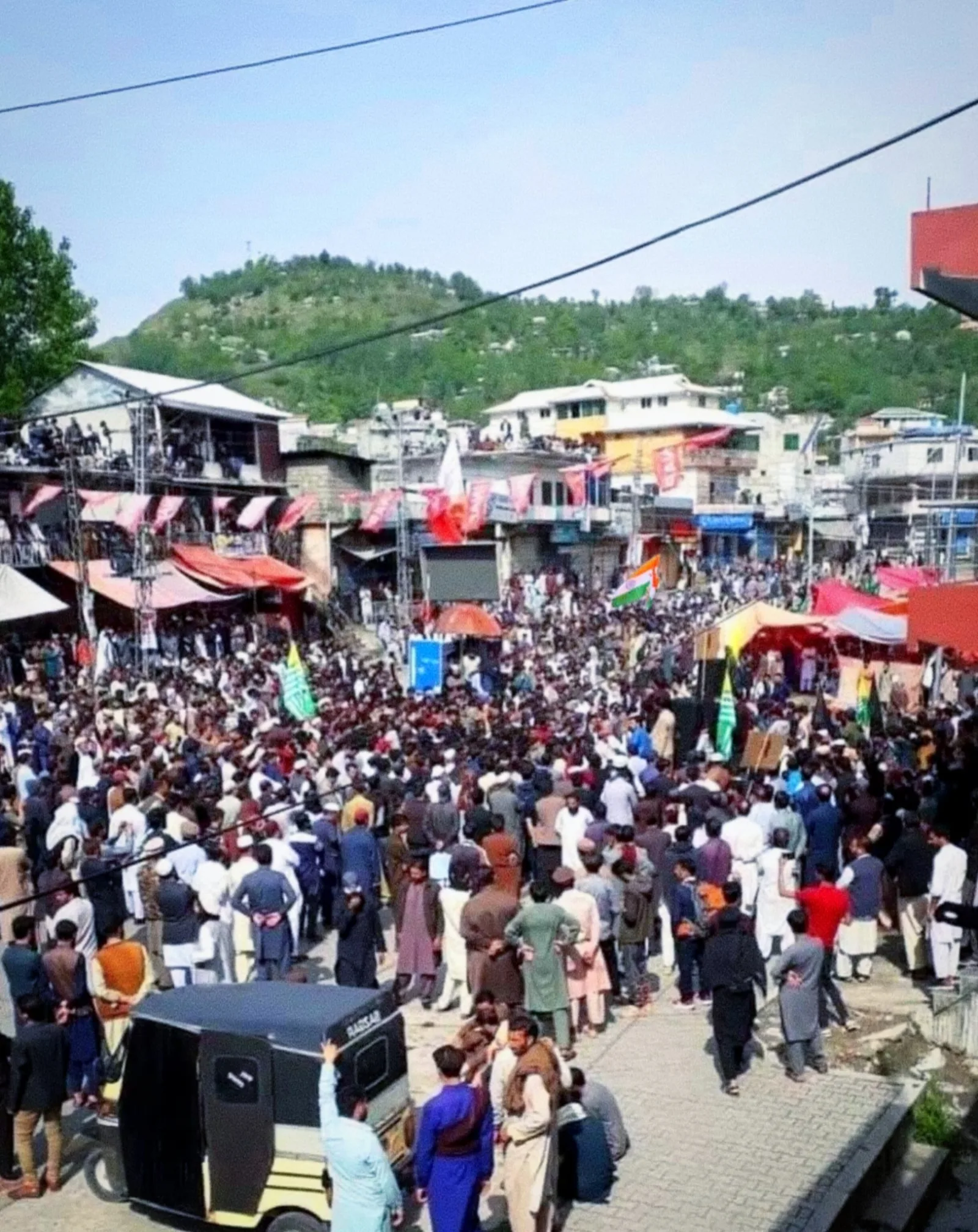 Over the last month, the situation in Pakistan-occupied Kashmir (PoK) has been markedby severe civil unrest, political turmoil and violent security crackdowns, leaving dozens dead and many more injured. Simmering discontent over inflation, lack of accountability and opaque governance in PoK leading to this mayhem has drawn international attention, with members of the Kashmiri diaspora, rights groups and global watchdogs raising concern over restrictions on journalists and media freedom. This paper therefore briefly outlines the causes of the latest situation, highlights the present on-ground situation and finally attempts to analyse plausible scenarios for the future.
KEY DRIVERS OF THE UNREST
• Abolition of Refugee Seats: The demand of Joint Kashmir Joint Awami Action Committee (JKJAAC) to abolish the 12 reserved legislative assembly seats for refugees strikes at the heart of Islamabad’s political influence in PoK. Under the current constitutional framework, 12 of the 53 seats in the PoK Legislative Assembly, nearly 23% of the total, are reserved for Kashmiri refugees residing in mainland Pakistan rather than within PoK itself. Critics argue that elections to these seats are conducted among refugee populations in provinces such as Punjab, where voter turnout is often low and susceptible to political manipulation. As a result, Pakistan’s ruling federal parties are able to use these seats to secure legislative majorities and shape the formation of governments in Muzaffarabad, reinforcing Islamabad’s control over the territory. The controversy reached a turning point on 7 June 2026, when the Azad Kashmir Supreme Court ruled that the refugee seats enjoy constitutional protection and cannot be abolished or amended without changes to Pakistan’s federal constitution. The verdict was met with widespread opposition and triggered a major escalation in protests, culminating in a JKJAAC-led long march to Muzaffarabad, with demonstrators arguing that the reserved seats undermine genuine local representation and democratic accountability.
• Economic & Governance Grievances: The immediate unrest in PoK is rooted in long-standing economic grievances that the JKJAAC has consolidated into its 38-point Charter of Demands. At the centre of these demands is the perception that the region is being systematically exploited economically while receiving little benefit from its own resources. One of the most contentious issues concerns electricity generated by the Mangla Dam, where residents argue that although PoK produces inexpensive hydroelectric power, they are compelled to purchase it back at heavily inflated tariffs burdened by multiple taxes and surcharges. Protesters have therefore demanded that electricity prices be linked directly to local production costs rather than to national pricing mechanisms. The deteriorating economic situation has also been exacerbated by soaring inflation and shortages of essential commodities, particularly wheat flour. In response to widespread protests, Pakistan’s federal government announced an emergency subsidy package of 23 billion Pakistani rupees (approximately US$82 million) to reduce flour prices. However, JKJAAC leaders have dismissed the package as a temporary concession that fails to address the structural economic neglect and financial extraction experienced by the region over decades.
These economic grievances have increasingly intersected with political repression and demands for greater political representation. Following the proscription of JKJAAC under the Azad Jammu and Kashmir Anti-Terrorism Act in June 2026, security forces conducted crackdowns and confronted protesters across Rawalakot, Kotli, Mirpur and other districts. The subsequent violence, compounded by renewed clashes during the July–August legislative elections, has reportedly resulted in more than 40 protesters being killed, alongside at least seven security personnel, although casualty figures remain contested amid communications and media restrictions. More than 200 people were reportedly injured during the initial crackdown, while subsequent arrests and clashes have further deepened public anger and political alienation. Simultaneously, the authorities have sought to restrict the flow of information from the region through stringent censorship measures. Protesters and rights groups have alleged that the administration imposed a rolling 54-day communication and mobile internet blackout, alongside restrictions on journalists and international media access, significantly limiting independent reporting on developments within PoK. Collectively, these economic hardships, governance concerns, and coercive state responses have transformed what began as protests over the cost of living into a broader movement challenging Islamabad’s administrative and political control over the region.
• Election Boycott: The 2026 general elections in PoK, conducted in phases during late July and early August, have been widely contested, with significant sections of the political opposition and civil society questioning both the credibility of the process and the legitimacy of the outcome. Critics argue that the elections took place in an atmosphere marked by political repression, restrictions on dissent, and heightened security operations, undermining public confidence in the electoral process.
A major source of controversy was the boycott by prominent political actors, most notably the Pakistan Tehreek-e-Insaf (PTI), which refused to participate because the political environment was neither free nor fair. Opposition groups cited the banning of local rights organisations, the detention of activists, and allegations of systematic electoral manipulation as evidence that the elections could not be considered genuinely representative. These concerns were echoed by several local groups, which maintained that meaningful political participation had become impossible under prevailing conditions.
To ensure that polling proceeded despite widespread calls for a boycott, shutdowns, and civilian blockades, the Pakistani authorities reportedly deployed an additional 14,000 police and paramilitary personnel, largely drawn from Punjab Province. The heavy security presence was viewed by many residents as an attempt to enforce voting through coercive means rather than to facilitate a free electoral exercise, further reinforcing perceptions of militarisation and external control over the region.
Although election officials announced voter turnouts exceeding 50 per cent in several constituencies and declared the process successful, these claims have been challenged by local networks and independent observers, who reported widespread public disengagement and resistance to the polls. Critics have characterised the elections as a managed political exercise designed to secure the victory of parties aligned with Pakistan’s federal establishment and to install a government in Muzaffarabad that remains politically dependent on Islamabad. Consequently, the disputed electoral process has become another focal point of the broader movement demanding greater political autonomy, representative governance, and an end to perceived federal interference in PoK’s internal affairs.
OVERVIEW OF ON-GROUND CONDITIONS
The situation in PoK remains highly volatile, with continuing tensions between protesters and Pakistani security forces. Demonstrations that initially centred on economic grievances and political representation have evolved into a broader confrontation over governance and Islamabad’s role in the region. Major urban centres, including Muzaffarabad, Rawalakot, Mirpur, Kotli, and Bagh, have witnessed repeated clashes, resulting in substantial casualties. According to activists and local reports, dozens of civilians have been killed and several hundred injured, with allegations that security forces used live ammunition, sniper fire, and excessive force to disperse demonstrators. The violence has further intensified public resentment and deepened mistrust of the authorities.
In response to the expanding protest movement, the Pakistani government has adopted an increasingly coercive approach. The JKJAAC has been proscribed under anti-terrorism legislation, while several of its senior leaders have been arrested or declared wanted, with financial rewards reportedly announced for information leading to their capture. Federal police and paramilitary forces have been deployed across the region to reinforce local security, accompanied by prolonged curfews, checkpoints, and extensive search operations aimed at preventing the mobilisation of protesters.
Parallel to the security crackdown, the authorities have sought to restrict the flow of information from the region through stringent communication controls. Mobile internet services have been repeatedly suspended, access to news websites and social media platforms has been restricted, and journalists have faced significant obstacles in reporting developments on the ground. These communication blackouts and censorship measures have limited independent verification of events and drawn criticism from rights groups, which argue that the restrictions are intended to suppress public mobilisation and reduce international scrutiny of the unfolding crisis. Taken together, the sustained violence, intensified security measures, and information controls suggest that the unrest in PoK has evolved beyond a temporary protest movement into a prolonged political and governance challenge for Islamabad.
PLAUSIBLE SCENARIOS
• Short term - The most probable outcome is that Pakistan continues to contain rather than resolve the crisis. Islamabad is likely to combine security operations, targeted arrests, economic subsidies, and controlled elections to restore a degree of stability without addressing structural grievances. The military establishment would remain the principal decision-maker, while civilian governments administer day-to-day governance. This approach mirrors Pakistan’s response to previous episodes of unrest in PoK and other peripheral regions. At the same time, Pakistan’s security establishment may seek to divert attention from domestic unrest by modestly increasing cross-border infiltration attempts and reviving dormant terrorist networks in Jammu and Kashmir while keeping escalation below the threshold of a major military crisis. For India, Pakistan’s attention and resources remain divided, but there is no immediate change in territorial control. India benefits from highlighting governance contrasts without taking actions that could internationalise the dispute or provoke military escalation.
• Medium term - If economic hardships, political exclusion, and constitutional disputes persist, PoK could experience sustained cycles of protest, weakening the legitimacy of Pakistan-backed institutions. Movements such as the JKJAAC may increasingly frame their demands around local rights, economic justice, and representative governance rather than solely traditional constitutional questions. Islamabad would retain control but at growing political and economic cost. As internal legitimacy continues to erode, the military establishment could increasingly rely on proxy terrorist groups and hybrid warfare tactics to externalise domestic pressures and reinforce the Kashmir issue in Pakistan’s strategic narrative. This scenario offers India greater diplomatic space to underscore governance deficiencies in PoK while showcasing improvements in infrastructure, tourism, democratic participation and economic development in the Union Territory of Jammu & Kashmir.
• Long term - A broader political or economic crisis within Pakistan, combined with prolonged instability in PoK, could create conditions for significant constitutional or political change. This does not necessarily imply integration with India, but could involve demands for greater autonomy, renegotiation of Pakistan’s administrative arrangements, or wider federal restructuring. Such a scenario would likely attract the attention of major external stakeholders, particularly China, given the strategic importance of the China-Pakistan Economic Corridor (CPEC). Should Pakistan face prolonged political instability, there is a heightened risk that elements within the security establishment may further expand the use of proxy terrorist organisations, potentially incorporating transnational jihadist linkages and operational innovations to compensate for declining political influence in the region. India, in such a situation, would need to proceed cautiously, reaffirming its consistent legal position on the former princely state while avoiding any actions that could be construed as exploiting instability. Diplomatic engagement, strategic communication and contingency planning would become particularly important.
STRATEGIC ASSESSMENT
From an Indian strategic perspective, the developments in PoK should continue to be viewed primarily as a governance and legitimacy challenge confronting Pakistan, rather than as an immediate geopolitical opportunity. Although the ongoing protests underscore growing dissatisfaction with political representation, economic exploitation and Islamabad’s intervention in local affairs, they do not indicate an imminent collapse of Pakistan’s administrative control. Consequently, India’s response should remain measured, avoiding any perception of exploiting internal unrest while continuing to advance its long-term strategic objectives.
India’s principal comparative advantage lies in demonstrating effective governance, democratic participation, infrastructure development and economic growth in the Union Territory of Jammu and Kashmir, thereby presenting a clear contrast with the persistent governance deficits evident in PoK. Simultaneously, New Delhi should continue to raise concerns regarding political disenfranchisement, human rights issues and economic exploitation in PoK through credible diplomatic channels and multilateral forums, reinforcing the narrative that the region’s instability stems from structural governance failures rather than external factors. At the same time, India must preserve its long-standing legal and diplomatic position that the entire former princely state of Jammu and Kashmir, including Pakistan-occupied territories, remains an integral part of India.
However, the evolving security environment also demands continued vigilance. Recent intelligence assessments reported by India Today indicate that Pakistan’s Inter-Services Intelligence (ISI) is attempting to revive the terrorist ecosystem in Jammu and Kashmir by drawing upon Hamas-linked operational methods and propaganda. According to these assessments, the ISI is seeking to expose cadres of Pakistan-based terrorist organisations, including Lashkar-e-Taiba, to tactics associated with Hamas, while simultaneously exploiting the Gaza conflict for online radicalisation, recruitment, and propaganda. Intelligence inputs further identify Rawalakot in PoK as an important platform for interactions involving Hamas-linked representatives and Pakistan-based extremist organisations, highlighting concerns over the convergence of transnational jihadist narratives with Pakistan-sponsored proxy networks. The reported emphasis on concealed weapons, mobile logistics, and renewed recruitment efforts suggests that Pakistan may seek to compensate for its declining influence within the Valley by reinvigorating cross-border terrorism rather than addressing the underlying political and economic grievances driving unrest in PoK.
Accordingly, India’s strategic approach must remain two-pronged. While continuing to exercise restraint and avoid unnecessary military escalation, New Delhi should strengthen intelligence cooperation, counter-radicalisation initiatives, and counter-infiltration capabilities along the Line of Control to pre-empt any renewed terrorist campaign. The juxtaposition of domestic unrest within PoK and reported efforts by Pakistan’s security establishment to revive proxy terrorism underscores a broader pattern: rather than undertaking meaningful political reforms in the region, Islamabad may increasingly rely on externalising internal pressures through asymmetric strategies directed against India. This reinforces the need for India to combine robust security preparedness with sustained diplomatic engagement and effective governance, allowing Pakistan’s internal contradictions in PoK to increasingly shape international perceptions while safeguarding India’s own security interests.
Over the last month, the situation in Pakistan-occupied Kashmir (PoK) has been markedby severe civil unrest, political turmoil and violent security crackdowns, leaving dozens dead and many more injured. Simmering discontent over inflation, lack of accountability and opaque governance in PoK leading to this mayhem has drawn international attention, with members of the Kashmiri diaspora, rights groups and global watchdogs raising concern over restrictions on journalists and media freedom. This paper therefore briefly outlines the causes of the latest situation, highlights the present on-ground situation and finally attempts to analyse plausible scenarios for the future.
KEY DRIVERS OF THE UNREST
• Abolition of Refugee Seats: The demand of Joint Kashmir Joint Awami Action Committee (JKJAAC) to abolish the 12 reserved legislative assembly seats for refugees strikes at the heart of Islamabad’s political influence in PoK. Under the current constitutional framework, 12 of the 53 seats in the PoK Legislative Assembly, nearly 23% of the total, are reserved for Kashmiri refugees residing in mainland Pakistan rather than within PoK itself. Critics argue that elections to these seats are conducted among refugee populations in provinces such as Punjab, where voter turnout is often low and susceptible to political manipulation. As a result, Pakistan’s ruling federal parties are able to use these seats to secure legislative majorities and shape the formation of governments in Muzaffarabad, reinforcing Islamabad’s control over the territory. The controversy reached a turning point on 7 June 2026, when the Azad Kashmir Supreme Court ruled that the refugee seats enjoy constitutional protection and cannot be abolished or amended without changes to Pakistan’s federal constitution. The verdict was met with widespread opposition and triggered a major escalation in protests, culminating in a JKJAAC-led long march to Muzaffarabad, with demonstrators arguing that the reserved seats undermine genuine local representation and democratic accountability.
• Economic & Governance Grievances: The immediate unrest in PoK is rooted in long-standing economic grievances that the JKJAAC has consolidated into its 38-point Charter of Demands. At the centre of these demands is the perception that the region is being systematically exploited economically while receiving little benefit from its own resources. One of the most contentious issues concerns electricity generated by the Mangla Dam, where residents argue that although PoK produces inexpensive hydroelectric power, they are compelled to purchase it back at heavily inflated tariffs burdened by multiple taxes and surcharges. Protesters have therefore demanded that electricity prices be linked directly to local production costs rather than to national pricing mechanisms. The deteriorating economic situation has also been exacerbated by soaring inflation and shortages of essential commodities, particularly wheat flour. In response to widespread protests, Pakistan’s federal government announced an emergency subsidy package of 23 billion Pakistani rupees (approximately US$82 million) to reduce flour prices. However, JKJAAC leaders have dismissed the package as a temporary concession that fails to address the structural economic neglect and financial extraction experienced by the region over decades.
These economic grievances have increasingly intersected with political repression and demands for greater political representation. Following the proscription of JKJAAC under the Azad Jammu and Kashmir Anti-Terrorism Act in June 2026, security forces conducted crackdowns and confronted protesters across Rawalakot, Kotli, Mirpur and other districts. The subsequent violence, compounded by renewed clashes during the July–August legislative elections, has reportedly resulted in more than 40 protesters being killed, alongside at least seven security personnel, although casualty figures remain contested amid communications and media restrictions. More than 200 people were reportedly injured during the initial crackdown, while subsequent arrests and clashes have further deepened public anger and political alienation. Simultaneously, the authorities have sought to restrict the flow of information from the region through stringent censorship measures. Protesters and rights groups have alleged that the administration imposed a rolling 54-day communication and mobile internet blackout, alongside restrictions on journalists and international media access, significantly limiting independent reporting on developments within PoK. Collectively, these economic hardships, governance concerns, and coercive state responses have transformed what began as protests over the cost of living into a broader movement challenging Islamabad’s administrative and political control over the region.
• Election Boycott: The 2026 general elections in PoK, conducted in phases during late July and early August, have been widely contested, with significant sections of the political opposition and civil society questioning both the credibility of the process and the legitimacy of the outcome. Critics argue that the elections took place in an atmosphere marked by political repression, restrictions on dissent, and heightened security operations, undermining public confidence in the electoral process.
A major source of controversy was the boycott by prominent political actors, most notably the Pakistan Tehreek-e-Insaf (PTI), which refused to participate because the political environment was neither free nor fair. Opposition groups cited the banning of local rights organisations, the detention of activists, and allegations of systematic electoral manipulation as evidence that the elections could not be considered genuinely representative. These concerns were echoed by several local groups, which maintained that meaningful political participation had become impossible under prevailing conditions.
To ensure that polling proceeded despite widespread calls for a boycott, shutdowns, and civilian blockades, the Pakistani authorities reportedly deployed an additional 14,000 police and paramilitary personnel, largely drawn from Punjab Province. The heavy security presence was viewed by many residents as an attempt to enforce voting through coercive means rather than to facilitate a free electoral exercise, further reinforcing perceptions of militarisation and external control over the region.
Although election officials announced voter turnouts exceeding 50 per cent in several constituencies and declared the process successful, these claims have been challenged by local networks and independent observers, who reported widespread public disengagement and resistance to the polls. Critics have characterised the elections as a managed political exercise designed to secure the victory of parties aligned with Pakistan’s federal establishment and to install a government in Muzaffarabad that remains politically dependent on Islamabad. Consequently, the disputed electoral process has become another focal point of the broader movement demanding greater political autonomy, representative governance, and an end to perceived federal interference in PoK’s internal affairs.
OVERVIEW OF ON-GROUND CONDITIONS
The situation in PoK remains highly volatile, with continuing tensions between protesters and Pakistani security forces. Demonstrations that initially centred on economic grievances and political representation have evolved into a broader confrontation over governance and Islamabad’s role in the region. Major urban centres, including Muzaffarabad, Rawalakot, Mirpur, Kotli, and Bagh, have witnessed repeated clashes, resulting in substantial casualties. According to activists and local reports, dozens of civilians have been killed and several hundred injured, with allegations that security forces used live ammunition, sniper fire, and excessive force to disperse demonstrators. The violence has further intensified public resentment and deepened mistrust of the authorities.
In response to the expanding protest movement, the Pakistani government has adopted an increasingly coercive approach. The JKJAAC has been proscribed under anti-terrorism legislation, while several of its senior leaders have been arrested or declared wanted, with financial rewards reportedly announced for information leading to their capture. Federal police and paramilitary forces have been deployed across the region to reinforce local security, accompanied by prolonged curfews, checkpoints, and extensive search operations aimed at preventing the mobilisation of protesters.
Parallel to the security crackdown, the authorities have sought to restrict the flow of information from the region through stringent communication controls. Mobile internet services have been repeatedly suspended, access to news websites and social media platforms has been restricted, and journalists have faced significant obstacles in reporting developments on the ground. These communication blackouts and censorship measures have limited independent verification of events and drawn criticism from rights groups, which argue that the restrictions are intended to suppress public mobilisation and reduce international scrutiny of the unfolding crisis. Taken together, the sustained violence, intensified security measures, and information controls suggest that the unrest in PoK has evolved beyond a temporary protest movement into a prolonged political and governance challenge for Islamabad.
PLAUSIBLE SCENARIOS
• Short term - The most probable outcome is that Pakistan continues to contain rather than resolve the crisis. Islamabad is likely to combine security operations, targeted arrests, economic subsidies, and controlled elections to restore a degree of stability without addressing structural grievances. The military establishment would remain the principal decision-maker, while civilian governments administer day-to-day governance. This approach mirrors Pakistan’s response to previous episodes of unrest in PoK and other peripheral regions. At the same time, Pakistan’s security establishment may seek to divert attention from domestic unrest by modestly increasing cross-border infiltration attempts and reviving dormant terrorist networks in Jammu and Kashmir while keeping escalation below the threshold of a major military crisis. For India, Pakistan’s attention and resources remain divided, but there is no immediate change in territorial control. India benefits from highlighting governance contrasts without taking actions that could internationalise the dispute or provoke military escalation.
• Medium term - If economic hardships, political exclusion, and constitutional disputes persist, PoK could experience sustained cycles of protest, weakening the legitimacy of Pakistan-backed institutions. Movements such as the JKJAAC may increasingly frame their demands around local rights, economic justice, and representative governance rather than solely traditional constitutional questions. Islamabad would retain control but at growing political and economic cost. As internal legitimacy continues to erode, the military establishment could increasingly rely on proxy terrorist groups and hybrid warfare tactics to externalise domestic pressures and reinforce the Kashmir issue in Pakistan’s strategic narrative. This scenario offers India greater diplomatic space to underscore governance deficiencies in PoK while showcasing improvements in infrastructure, tourism, democratic participation and economic development in the Union Territory of Jammu & Kashmir.
• Long term - A broader political or economic crisis within Pakistan, combined with prolonged instability in PoK, could create conditions for significant constitutional or political change. This does not necessarily imply integration with India, but could involve demands for greater autonomy, renegotiation of Pakistan’s administrative arrangements, or wider federal restructuring. Such a scenario would likely attract the attention of major external stakeholders, particularly China, given the strategic importance of the China-Pakistan Economic Corridor (CPEC). Should Pakistan face prolonged political instability, there is a heightened risk that elements within the security establishment may further expand the use of proxy terrorist organisations, potentially incorporating transnational jihadist linkages and operational innovations to compensate for declining political influence in the region. India, in such a situation, would need to proceed cautiously, reaffirming its consistent legal position on the former princely state while avoiding any actions that could be construed as exploiting instability. Diplomatic engagement, strategic communication and contingency planning would become particularly important.
STRATEGIC ASSESSMENT
From an Indian strategic perspective, the developments in PoK should continue to be viewed primarily as a governance and legitimacy challenge confronting Pakistan, rather than as an immediate geopolitical opportunity. Although the ongoing protests underscore growing dissatisfaction with political representation, economic exploitation and Islamabad’s intervention in local affairs, they do not indicate an imminent collapse of Pakistan’s administrative control. Consequently, India’s response should remain measured, avoiding any perception of exploiting internal unrest while continuing to advance its long-term strategic objectives.
India’s principal comparative advantage lies in demonstrating effective governance, democratic participation, infrastructure development and economic growth in the Union Territory of Jammu and Kashmir, thereby presenting a clear contrast with the persistent governance deficits evident in PoK. Simultaneously, New Delhi should continue to raise concerns regarding political disenfranchisement, human rights issues and economic exploitation in PoK through credible diplomatic channels and multilateral forums, reinforcing the narrative that the region’s instability stems from structural governance failures rather than external factors. At the same time, India must preserve its long-standing legal and diplomatic position that the entire former princely state of Jammu and Kashmir, including Pakistan-occupied territories, remains an integral part of India.
However, the evolving security environment also demands continued vigilance. Recent intelligence assessments reported by India Today indicate that Pakistan’s Inter-Services Intelligence (ISI) is attempting to revive the terrorist ecosystem in Jammu and Kashmir by drawing upon Hamas-linked operational methods and propaganda. According to these assessments, the ISI is seeking to expose cadres of Pakistan-based terrorist organisations, including Lashkar-e-Taiba, to tactics associated with Hamas, while simultaneously exploiting the Gaza conflict for online radicalisation, recruitment, and propaganda. Intelligence inputs further identify Rawalakot in PoK as an important platform for interactions involving Hamas-linked representatives and Pakistan-based extremist organisations, highlighting concerns over the convergence of transnational jihadist narratives with Pakistan-sponsored proxy networks. The reported emphasis on concealed weapons, mobile logistics, and renewed recruitment efforts suggests that Pakistan may seek to compensate for its declining influence within the Valley by reinvigorating cross-border terrorism rather than addressing the underlying political and economic grievances driving unrest in PoK.
Accordingly, India’s strategic approach must remain two-pronged. While continuing to exercise restraint and avoid unnecessary military escalation, New Delhi should strengthen intelligence cooperation, counter-radicalisation initiatives, and counter-infiltration capabilities along the Line of Control to pre-empt any renewed terrorist campaign. The juxtaposition of domestic unrest within PoK and reported efforts by Pakistan’s security establishment to revive proxy terrorism underscores a broader pattern: rather than undertaking meaningful political reforms in the region, Islamabad may increasingly rely on externalising internal pressures through asymmetric strategies directed against India. This reinforces the need for India to combine robust security preparedness with sustained diplomatic engagement and effective governance, allowing Pakistan’s internal contradictions in PoK to increasingly shape international perceptions while safeguarding India’s own security interests.